Techniques & materials
Every artwork exists at the intersection of vision and material reality. The choice between oil and tempera, between cotton and linen canvas, between a sable brush and an airbrush—these decisions fundamentally shape not only how a piece looks, but whether it will survive for decades or centuries. Understanding techniques and materials transforms how we create, appreciate, and preserve art.
This landscape has expanded dramatically. While classical methods like egg tempera and gold leaf gilding continue to inform contemporary practice, artists now navigate choices involving photopolymer plates, augmented reality layers, and the ethical dilemmas of perishable materials. Whether you’re drawn to the luminous depth of Old Master glazing or the temporal nature of camera-less photography, grasping the “how” and “why” behind artistic techniques deepens your engagement with the visual arts.
This resource maps the essential terrain: from the tactile traditions of printmaking and stone carving to the digital frontiers of interactive portraiture, exploring not just methods but the material consequences that every artist and collector must understand.
Traditional Painting Media: Foundations That Endure
Certain painting techniques have persisted for centuries not through nostalgia, but because their material properties remain unmatched for specific visual effects. Understanding these foundations clarifies why contemporary artists continue to reach for methods developed in medieval workshops or Renaissance studios.
Egg Tempera: Luminosity Through Patience
Egg tempera creates a luminosity that no modern acrylic can fully replicate. By binding pigment with fresh egg yolk, artists achieve translucent layers that seem to glow from within. The catch? You cannot blend tempera like oil paint. Each stroke dries within seconds, demanding a disciplined approach of building form through thousands of tiny, deliberate marks.
This technique requires rigid panels rather than canvas—the inflexibility of canvas causes tempera’s brittle surface to crack. Traditional gesso (made from rabbit-skin glue and chalk, not modern acrylic gesso) provides the absorbent, brilliant white ground that makes tempera’s colors sing. Artists must prepare fresh medium daily, mixing only what they’ll use in a single session.
Oil Painting and the Glazing Technique
The Old Master glazing technique remains relevant because it solves a problem digital screens have made us forget: how to create depth without simply layering opaque colors. Glazing involves applying transparent layers of oil paint over a dried underlayer, allowing light to penetrate, reflect off the lower layer, and travel back through the glaze.
This creates a visual depth impossible to achieve with direct painting alone. A crimson glaze over a warm brown underpainting produces a richness no single application of red can match. The process demands patience—each layer must dry completely, sometimes requiring days or weeks between sessions—but the resulting atmospheric depth explains why this centuries-old method still informs contemporary figurative painting.
Gold Leaf Gilding: Material as Light
Applying gold leaf—sheets of hammered gold thinner than tissue paper—transforms a surface into a light-reflective element that shifts with the viewer’s position. Whether using authentic 24-karat gold or composition leaf (a brass substitute), the principle remains: meticulous surface preparation determines success.
The sequence matters critically:
- Apply multiple coats of gesso to create a perfectly smooth foundation
- Brush on colored bole (a clay-based layer, traditionally red or yellow)
- Apply gilding size (adhesive) and wait for the precise “tack” moment
- Lay the fragile leaf and burnish to a mirror finish
Burnishing too soon tears the leaf; too late and it won’t adhere properly. This unforgiving process explains why gilding remains a specialized skill even in contemporary art applications.
From Classical Observation to Hyperrealism
The journey from traditional figurative techniques to contemporary hyperrealism illustrates how material choices and methods evolve while remaining rooted in observational discipline.
The Foundation: Life Study vs Photography
Classical training emphasizes drawing from life because three-dimensional observation teaches you to construct form, not merely copy contours. A photograph flattens spatial relationships and makes lighting decisions for you. Working from a live model forces you to interpret, to understand how anatomy creates the surface you see.
This doesn’t mean photographs have no place in contemporary practice. Many hyperrealist painters use high-resolution photography as source material—but the strongest work comes from artists who first mastered observational drawing. They bring that structural understanding to photographic sources, seeing through the camera’s distortions rather than blindly replicating them.
Hyperrealism: Tools for Invisible Transitions
Achieving photorealistic surfaces requires eliminating visible brushwork. Artists employ two primary approaches:
- Airbrush: Sprays microscopic paint droplets, creating seamless gradations but requiring masking and meticulous layering
- Sable brush: In skilled hands, fine sable brushes can blend transitions to imperceptibility through patient layering of thin glazes
- Hybrid methods: Many hyperrealists combine both, using airbrush for large gradations and fine brushes for detail
The time investment explains why a single hyperrealistic painting often requires six months or more. Each layer must dry, each transition demands multiple passes, and rendering details like skin pores involves magnification and obsessive precision. This isn’t “just copying photos”—it’s a technical marathon that photography accomplishes in a fraction of a second.
Printmaking: Multiplicity and the Artist’s Hand
Printmaking occupies a unique position in visual arts: creating original multiples where each impression is an authentic work, not a reproduction. Understanding the technical distinctions between methods clarifies both their aesthetic possibilities and market value.
Intaglio Methods: Printing from Incisions
Intaglio refers to techniques where ink sits in grooves cut or etched into a metal plate. When wiped and pressed under enormous pressure, the paper is forced into these grooves, pulling ink out and creating a slightly raised, tactile line.
Drypoint represents the most direct approach: scratching directly into copper or plastic with a sharp stylus. This raises a “burr” (rough edge) that catches ink, producing characteristically velvety lines. The fragility of this burr limits editions to roughly 20 high-quality impressions before it wears down—explaining why drypoint prints often have smaller edition sizes than other methods.
Aquatint creates tonal areas rather than lines. Artists dust fine rosin powder onto a metal plate, heat it until the particles fuse, then immerse the plate in acid. The acid bites around each rosin grain, creating a texture that holds ink. By controlling acid exposure time—seconds for pale grays, minutes for deep blacks—and painting out areas with varnish between successive acid baths, artists build complex tonal compositions.
Relief Printing: Wood Engraving
Unlike intaglio (printing from grooves), relief printing prints from raised surfaces. Wood engraving uses the incredibly hard end-grain of boxwood or lemonwood, allowing for extraordinarily fine detail—far finer than side-grain woodcut.
The engraver cuts away white areas, leaving black lines and forms in relief. Because the wood is so dense, it can hold lines as fine as those in metal engraving. The challenge lies in control: one slip cuts too deep, potentially ruining hours of work. While it’s theoretically possible to plug errors with wood filler, matching grain direction and hardness rarely succeeds convincingly.
Contemporary Alternatives: Photopolymer Plates
Environmental and health concerns have driven innovation in printmaking. Photopolymer plates offer a non-toxic alternative to traditional acid etching. These light-sensitive polymer plates harden when exposed to UV light. Artists create digital negatives in image-editing software, expose the plate through this negative using sunlight or a UV box, then wash away unexposed polymer with plain water.
The result functions like a traditional intaglio plate but eliminates nitric acid, ventilation requirements, and hazardous waste disposal. The trade-off: photopolymer requires careful calibration of exposure times, and under-exposure loses fine details that acid etching might capture.
Edition Ethics: What the Numbers Mean
When you see “15/50” on a print, that indicates the 15th impression from a total edition of 50. Professional practice includes several categories:
- Numbered edition: The primary series sold to collectors
- Artist’s Proofs (A.P.): Traditionally 10% of the edition, reserved for the artist’s use
- Printer’s Proofs (P.P.): Reserved for the master printer if working collaboratively
- Bon à Tirer (B.A.T.): The “good to pull” proof that serves as the standard for the edition
Ethical practice requires canceling the plate after printing—scratching or drilling through it to ensure no additional impressions can be made. Selling artist’s proofs before the numbered edition sells out undermines collector trust and devalues the edition structure.
Digital and Interactive Art: New Frontiers, New Challenges
Digital technologies have introduced artistic possibilities unimaginable a generation ago, from portraits that respond to viewers’ movements to augmented reality layers that reveal hidden narratives. These innovations bring unprecedented challenges for preservation and ethical practice.
Interactive Portraiture: When Art Watches Back
Motion sensors and facial recognition enable portraits that track viewers’ positions, making eye contact or revealing different content based on who’s looking. This transforms the traditionally passive viewing experience into a participatory exchange. Interactive installations can teach history through gamification, making biographical information or historical context accessible through gesture-based exploration.
The privacy question looms large: if an artwork collects biometric data—facial geometry, gait patterns, even emotional responses—who owns that data? Responsible artists and institutions now provide clear signage about data collection and ensure information is processed locally without storage or transmission.
Augmented Reality in Museum Spaces
AR applications like Smartify and Google Arts & Culture overlay digital information onto physical artworks viewed through smartphone screens. Point your device at a painting, and you might see X-ray imagery revealing underdrawings, conservation details, or the artist’s preparatory sketches.
The tension lies in balance. Visitors absorbed in screens miss the material presence of the actual work—the texture of brushstrokes, the subtle color variations that screens cannot reproduce, the scale that photographs diminish. Effective AR use means brief consultations to enhance observation, not replace it.
Practical considerations for AR museum tours:
- Fully charge your device beforehand (AR drains batteries rapidly)
- Download content on WiFi to minimize data usage
- Alternate between screen and direct viewing
- Use earbuds to avoid disturbing other visitors
Preservation Crisis: Digital Obsolescence
Software-based artworks face an existential threat: the platforms they depend on become obsolete. Flash-based net art from the early 2000s became largely inaccessible when browsers discontinued Flash support. Windows 95-era software art requires increasingly specialized knowledge to run.
Conservation strategies include:
- Emulation: Creating virtual machines that mimic obsolete operating systems
- Migration: Converting works to current platforms (HTML5 replacing Flash), though this risks altering the work’s function or aesthetic
- Documentation: High-quality screen capture and code documentation preserve at least a historical record
The deeper question remains unresolved: is a video recording of interactive net art sufficient for art history, or does the loss of function constitute the death of the work?
Material Instability: Conservation Challenges
While traditional oil paintings can survive centuries with proper care, contemporary mixed media and conceptual works often incorporate materials that actively resist preservation. Understanding these challenges matters whether you’re creating, collecting, or simply trying to grasp an artist’s intent.
Mixed Media: When Materials Fight Each Other
Mixed media assemblages combine materials with different expansion rates, chemical compositions, and environmental needs. A collage might include acidic newspaper (which yellows and becomes brittle), acrylic medium (which remains flexible), and found metal objects (which may rust). Over time, these materials respond differently to humidity and temperature, creating internal stresses.
Certain adhesives contain acids that accelerate paper deterioration. Some glues remain flexible while others become brittle and release components that damage adjacent materials. This explains why mixed media works sometimes “self-destruct”—the piece wasn’t poorly made, but the materials are fundamentally incompatible over decades.
Conservation costs for damaged assemblage pieces vary wildly based on complexity, but stabilizing a deteriorating mixed media work can easily cost several thousand pounds, sometimes approaching the work’s market value.
Perishable Art: Intentional Impermanence
Some artists deliberately use chocolate, fat, organic matter, or decomposing materials to make philosophical points about time, consumption, or the nature of value. Conservation professionals face an ethical dilemma: should you preserve what the artist intended to decay?
When Joseph Beuys used fat and felt, or when contemporary artists incorporate food, the material choice is often conceptually integral. “Fixing” the deterioration without consulting the living artist (or their estate) may fundamentally alter the work’s meaning. For deceased artists, conservators consult documentation, interviews, and comparable works to understand intent.
For institutions storing perishable art when not displayed:
- Freezer storage: Dramatically slows organic decay but risks ice crystal damage
- Vacuum sealing: Removes oxygen, inhibiting many forms of deterioration
- Pest management: Physical barriers and environmental controls prevent moth and mold damage without pesticides that might react with the artwork
The question “is it still the same work if you replace the rotting fruit?” touches deep issues of authenticity and authorship that the art world continues to debate.
Fine Art Printing: Reproduction as Art Form
Photography and digital art depend on print quality for physical manifestation. Understanding printing methods, substrate choices, and archival considerations separates professional practice from amateur output.
Giclée vs C-Type Printing
Giclée printing uses archival inkjet technology, spraying microscopic pigment droplets onto fine art paper or canvas. High-end giclée printers employ 8-12 ink cartridges (versus 4 in consumer printers), expanding the color gamut and improving longevity. Quality archival pigments can last 100+ years under museum conditions.
C-Type (chromogenic) prints use traditional photographic processes, exposing light-sensitive paper with lasers or LEDs, then processing through chemistry. They offer continuous tone (no visible dots) and a specific aesthetic that some photographers prefer, though longevity varies by paper and processing quality.
The critical issue: your monitor displays in RGB (red, green, blue light), but prints use CMYK (cyan, magenta, yellow, black pigments) or expanded inksets. Bright blues and saturated greens often shift during this translation, appearing duller in print. Proper color management and test prints prevent disappointing surprises.
Signing and Handling Prints
Professional convention dictates signing prints in pencil (graphite won’t fade like some inks) below the image on the paper border, typically on the right side. Edition numbers go on the left, title in the center. Never sign directly on the printed image area.
Transport large prints rolled face-out around a wide-diameter tube (minimum 4 inches) to avoid kinking. Never touch the printed surface with bare hands—skin oils transfer and attract dust. Handle prints by edges only, or wear cotton gloves.
Sculptural Techniques: Form and Material
While painting and printmaking dominate discussions of technique, sculptural processes involve equally specific material knowledge and physical demands.
Lost Wax Bronze Casting
Transforming clay or wax into permanent bronze follows an ancient but still-essential process:
- Create the original model in clay or sculpt directly in wax
- Make a mold (silicone for complex details, plaster for simpler forms)
- Create a wax positive from this mold
- Attach wax “sprues” (channels for bronze flow and air escape)
- Encase the wax in ceramic shell material
- Fire the shell, melting out the wax (thus “lost wax”)
- Pour molten bronze (reaching 1,150°C) into the cavity
- Break away the ceramic shell
- Cut off sprues, repair seams, and chase surface details
- Apply chemical patinas for color
Foundry costs surprise many sculptors. Between mold-making, ceramic shell materials, bronze metal, furnace operation, and skilled labor, a modest bronze edition can cost thousands. This economic reality explains why many sculptors only bronze their most successful pieces.
Direct Stone Carving: Subtractive Thinking
Carving stone demands a fundamentally different mindset than modeling clay. You cannot add material back; every strike of the chisel is permanent. This requires “seeing” the finished form within the block and removing everything that isn’t it.
Marble offers translucency and a capacity for fine detail but costs significantly more than limestone. Limestone, being softer, suits beginners learning chisel control. Both generate silica dust, which causes irreversible lung disease. Proper respiratory protection (fitted P100 or N95 masks, not simple dust masks) is non-negotiable, not optional.
Achieving a polished surface requires progressing through increasingly fine abrasives: coarse sandpaper smooths initial roughness, then finer papers, finally diamond polishing pads for glass-like finishes that seem to glow from within.
Camera-less Photography: Light as Medium
Photograms, cyanotypes, and lumen prints create images without cameras by placing objects directly on light-sensitive materials. This “analog” approach has gained traction among contemporary artists not through nostalgia, but because it offers unique tactile and visual qualities digital processes cannot replicate.
Creating cyanotypes (blueprints) requires coating paper with light-sensitive chemicals (ferric ammonium citrate and potassium ferricyanide), arranging objects on the dried paper, exposing to sunlight, then washing to reveal cyan-blue images. No darkroom needed—just sun and water.
The resulting works face display challenges. Prolonged light exposure fades cyanotypes, requiring UV-filtering glazing or display in dim conditions. This tension—artwork made with light that is damaged by light—exemplifies the material contradictions contemporary artists navigate.
Cold Wax Medium: Building Texture in Oil Painting
Cold wax medium, when mixed with oil paints, transforms their handling properties. The wax stiffens the paint, enabling you to build impasto layers, scrape back to reveal underlayers, and create textural complexity impossible with fluid oils alone.
Artists typically mix wax and oil paint at ratios from 1:1 to 3:1 (wax to paint). Too much wax creates a crumbly surface prone to damage; too little doesn’t provide the desired body. Palette knives and squeegees replace brushes, dragging the stiffened paint across the surface to create ridges and valleys.
A critical error: framing cold wax paintings under glass. The wax needs to breathe and cure over time. Glass traps moisture and can cause the wax surface to fog or develop condensation. These works should be framed open or with significant spacing if glazing is absolutely necessary.
For artists concerned about solvent toxicity, citrus-based cleaners dissolve wax from tools as effectively as mineral spirits, offering a less toxic studio environment.
The landscape of artistic techniques and materials continues to expand, yet fundamental principles persist: understanding how materials behave over time, respecting the relationship between method and meaning, and recognizing that technical choices are never neutral. Whether you’re drawn to the slow discipline of egg tempera or the digital possibilities of interactive portraiture, engaging deeply with process enriches both making and viewing. Each technique opens specific aesthetic possibilities while imposing particular constraints—and within those constraints, artists have always found freedom.
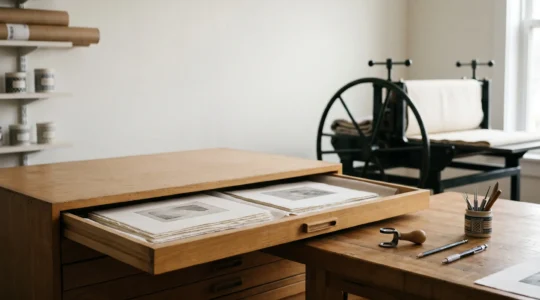
Artist’s Proof vs. Limited Edition: A Registrar’s Guide to Print Numbering
The confusion surrounding print numbering stems from treating it as a mere label, when it is a binding contract of verifiable scarcity. An Artist’s Proof (AP) is not just an early print; it’s part of the artist’s personal collection, held…
Read more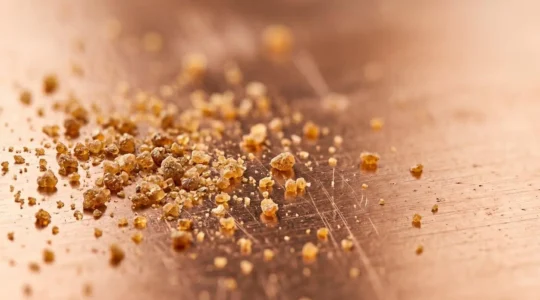
How to Create Tonal Washes in Etching with Aquatint Rosin
To move beyond flat line work, an etcher must learn to think in veils of tone, a skill unlocked not by a formula, but by developing a sensory dialogue with the aquatint process. The quality of your tonal wash is…
Read more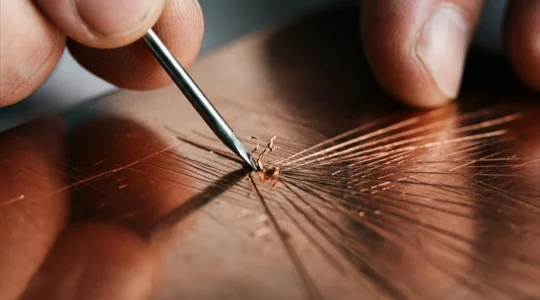
Why Is Drypoint the Most Direct Form of Intaglio Printmaking?
Drypoint is the most direct printmaking method because the artist’s hand physically plows metal, creating a fragile burr that is both the source of its beauty and its fatal flaw. The signature velvety line comes from ink trapped in this…
Read more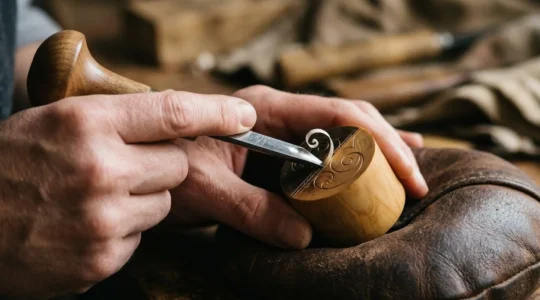
How to Engrave End-Grain Wood for Highly Detailed Illustrations
In summary: Mastering wood engraving relies on understanding material science: wood density dictates line fineness. Precise control comes from moving the block on a sandbag, not just the tool. Inking is a science of surface tension; a hard roller is…
Read more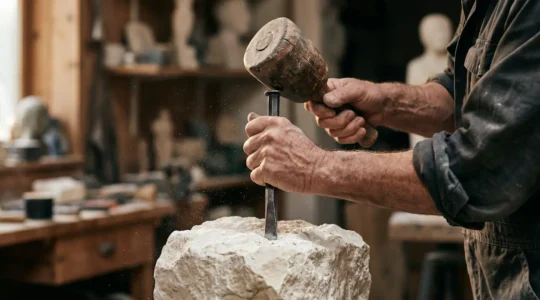
Direct Carving vs. Pointing Machine: How Do You Truly Approach a Block of Stone?
The greatest mistake in stone carving is believing your job is to impose a perfect idea onto a block; the reality is your role is to engage in a physical dialogue with the material. Success comes not from rigid planning,…
Read more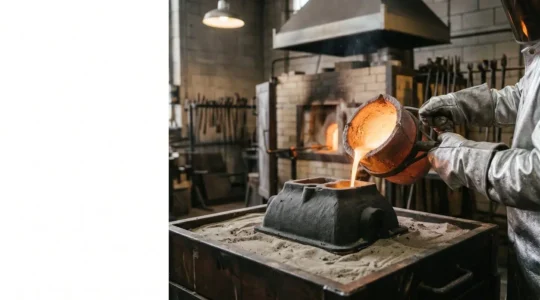
Lost Wax Process: How to Turn a Clay Model into a Bronze Statue?
Transforming your clay sculpture into bronze is not just a technical process; it’s a series of critical artistic decisions that lock in its final form and value. The choice between silicone and plaster for the initial mold is the first…
Read more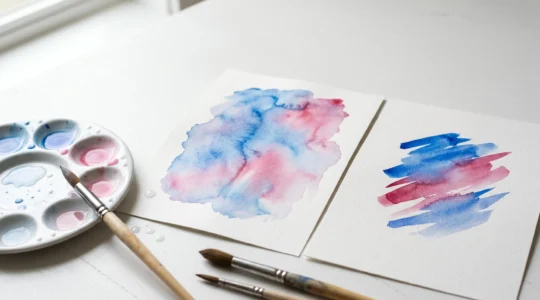
Beyond Wet-on-Wet vs. Wet-on-Dry: Mastering the Secret Language of Water
Contrary to popular belief, mastering watercolor isn’t about choosing between wet-on-wet or wet-on-dry—it’s about understanding the spectrum of dampness in between. “Mistakes” like blooms are controllable effects that happen in the “critical window” when paper is damp, not soaking wet….
Read more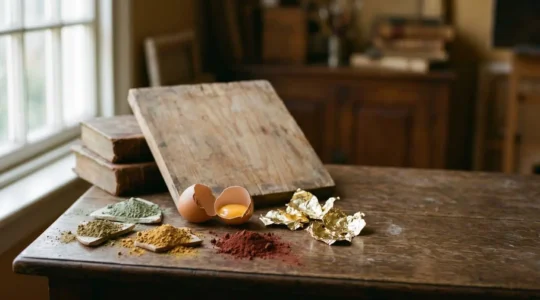
Byzantine vs Renaissance: How Did Tempera Techniques Evolve in History?
The shift from tempera to oil wasn’t about one medium being ‘better’, but a story of evolving artistic goals demanding new technical solutions. Byzantine artists used tempera’s properties to achieve spiritual luminosity, not earthly realism. Renaissance masters pushed its linear…
Read more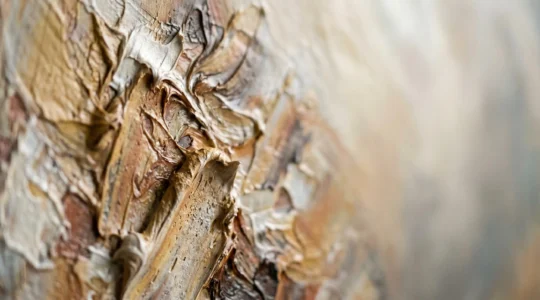
How to Build Texture and Layers using Cold Wax Medium with Oils?
Adding cold wax to oil paint isn’t about creating texture; it’s about transforming paint into a sculptural medium you can excavate. The stability of your work depends on respecting a strict wax-to-paint ratio, beyond which the paint film becomes fragile….
Read more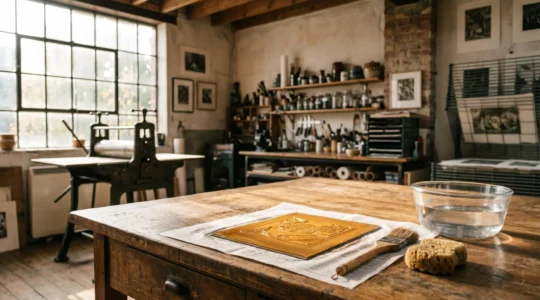
How to Use Photopolymer Plates for Non-Toxic Intaglio Printmaking?
In summary: Mastering photopolymer printmaking involves a dialogue between digital precision and the physical response of the plate and ink. Calibrating UV exposure times is the critical first step to achieving crisp lines and rich tonal range, preventing common errors…
Read more