Blog
The contemporary art world can feel like an exclusive club with invisible doors and unwritten rules. Yet behind the polished gallery walls and academic jargon lies a vibrant ecosystem of creators, thinkers, and communities reshaping how we experience culture. This blog exists to open those doors—not with reverence, but with curiosity and a commitment to making art accessible without dumbing it down.
Whether you’re navigating emerging neighborhoods where street art collides with commercial galleries, understanding what curators actually do when planning exhibitions, questioning how activism intersects with aesthetics, or learning to write criticism that goes beyond personal taste, you’ll find practical insights rooted in real experiences. The articles here don’t just celebrate art—they investigate its systems, challenge its assumptions, and equip you with the knowledge to engage confidently with contemporary culture.
What follows is a roadmap to the key themes explored across this blog: discovering cutting-edge art scenes, understanding curatorial decision-making, examining art’s relationship with social movements, and developing a critical voice. Each section connects to deeper explorations, giving you both the broad context and the specific tools to become a more informed participant in today’s cultural conversations.
Discovering Emerging Art Scenes Worth Your Time
The geography of art matters. While major institutions dominate cultural headlines, some of the most exciting creative energy bubbles up in neighborhoods and regions that lack the prestige of established art capitals. Understanding where to look—and when—transforms casual gallery-hopping into meaningful cultural exploration.
East London’s Gallery Districts and Street Art Legacy
East London has evolved from post-industrial neglect into one of Europe’s most dynamic contemporary art hubs. Shoreditch and Hackney Wick represent two distinct approaches to this transformation: the former now balances commercial galleries with tourist-friendly street art trails, while the latter maintains a grittier, more experimental edge through artist studios and warehouse spaces.
Timing your visits strategically makes an enormous difference. Private views—invitation-only exhibition openings—offer direct access to artists and curators, though getting on guest lists requires building relationships with galleries through regular attendance and genuine engagement. Open studio weekends, typically held seasonally, provide rare glimpses into working spaces where art is made rather than merely displayed.
The preserved works of Banksy scattered across London serve as cultural landmarks, yet the city’s street art ecosystem extends far beyond one artist. Neighborhoods like Brick Lane and Leake Street host constantly evolving outdoor galleries where legal walls invite new work while historical pieces face the inevitable erosion of weather and property development.
The Scottish Highlands’ Creative Revival
Far from urban art centers, the Scottish Highlands have quietly become a magnet for landscape artists, writers, and makers seeking solitude and dramatic natural inspiration. This shift reflects a broader pattern: artists increasingly value uninterrupted creative time over proximity to market infrastructure.
Highland residencies offer what cities cannot—weeks or months of focused work amid mountains, lochs, and coastlines. The Isle of Skye, in particular, attracts photographers navigating the challenge of capturing its moody landscapes. The consensus among experienced shooters: dawn and dusk provide the dramatic side-lighting that defines compelling Highland imagery, though Scotland’s notoriously unpredictable weather demands protective strategies for plein air equipment.
Beyond fine art, the region sustains traditional craft practices—weaving, pottery, woodworking—often available directly from makers’ studios. These small galleries and workshops, frequently overlooked by tourists rushing toward Edinburgh’s established museums, offer both authentic cultural encounters and insights into how creative practices adapt to remote, rural contexts.
The Curator’s Craft: More Than Hanging Pictures
The word “curator” has been diluted by overuse, applied to everything from playlist creation to retail merchandising. In the art world, however, curators function as storytellers, diplomats, and logistical orchestrators whose decisions shape how audiences understand and experience culture. Their work begins long before installation and continues well after opening night.
Storytelling Through Exhibition Design
An exhibition is a three-dimensional narrative. The sequence in which visitors encounter artworks, the spatial relationships between pieces, even the color of gallery walls—all serve the curator’s interpretation. A painting positioned at the entrance sets a thematic tone; works placed in dialogue across a room create visual conversations; lighting choices direct attention and evoke mood.
Choosing exhibition themes involves balancing intellectual ambition with audience appeal. Blockbuster exhibitions attract large crowds and ticket revenue through recognizable names and accessible themes, while academic shows take intellectual risks that may educate smaller, specialized audiences. The most successful curators find the overlap: subjects rigorous enough to matter but presented in ways that invite rather than intimidate.
This storytelling extends to wall texts, catalogue essays, and public programming. The challenge is providing enough context for understanding without over-explaining or prescribing interpretation. Great curators create frameworks for meaning while respecting viewers’ intelligence and individual responses.
Navigating Artist Relationships and Logistics
Behind polished exhibition spaces lies complex human and logistical choreography. Curators must negotiate with artists whose creative vision may conflict with practical constraints or institutional objectives. Managing these relationships requires diplomacy—knowing when to advocate for an artist’s needs and when to hold firm on feasibility or budgetary limits.
Installation periods test these relationships. Artists may arrive with ideas that contradict agreed-upon plans; technical requirements may exceed available resources; egos may clash when multiple creators share a space. Experienced curators develop conflict-resolution skills as essential as art historical knowledge.
Major exhibitions require planning timelines measured in years, not months. Negotiating international art loans for retrospectives involves:
- Establishing relationships with lending institutions
- Securing conservation approvals and insurance coverage
- Coordinating shipping schedules across multiple countries
- Navigating export restrictions and cultural patrimony laws
The curator who begins these conversations too late faces empty gallery walls and broken promises. Starting early—often two to three years before a planned opening—separates ambitious projects from feasible ones.
Art, Activism and Ethical Questions
Contemporary art increasingly positions itself as a vehicle for social commentary and political change. This intersection raises urgent questions about effectiveness, authenticity, and institutional responsibility. Can aesthetics actually drive policy? Do galleries practice the values they exhibit, or merely perform them?
When Art Meets Protest
Recent years have witnessed activists targeting artworks in galleries—throwing soup at glass-protected paintings, gluing themselves to frames—to draw attention to climate change and other urgent causes. These actions spark fierce debate: do such tactics successfully amplify important messages, or do they alienate potential allies by appearing to attack culture itself?
Proponents argue that dramatic disruption creates media coverage that polite protest cannot achieve, using art’s cultural significance as a platform. Critics counter that vandalism—even symbolic, temporary vandalism—undermines the seriousness of both the cause and the artwork, generating backlash rather than persuasion.
Meanwhile, socially conscious art created by artists rather than activists faces different scrutiny. Does work addressing inequality, injustice, or environmental crisis actually change minds and behaviors? Or does it primarily offer audiences the comfortable feeling of engagement without demanding real action? The most honest answer acknowledges both potential and limitations: art excels at making abstract problems visceral and human, but rarely translates directly into legislative outcomes.
Funding Controversies and Institutional Accountability
Who pays for art matters. The removal of the Sackler name from museums and the ongoing debates about petroleum company sponsorship reflect growing awareness that cultural philanthropy can function as reputation laundering for controversial wealth.
“Woke-washing” describes institutions that publicly embrace progressive values while maintaining financial relationships with entities whose practices contradict those values. Spotting this performative commitment requires examining:
- Whether diversity initiatives extend beyond visitor-facing programming to governance and permanent collections
- How institutions respond to criticism—with defensive dismissal or substantive policy changes
- The gap between public statements and funding transparency
Simultaneously, concerns about “cancel culture” and self-censorship persist. Some argue galleries increasingly avoid exhibiting controversial work to prevent social media backlash, prioritizing institutional safety over artistic risk. Others contend that accountability for harmful representations isn’t censorship but overdue responsibility.
The tension is real: museums must balance educational mission, artistic freedom, diverse audiences, and ethical funding. There are no easy answers, but asking who benefits and who decides remains essential.
Writing Meaningful Art Criticism
Saying “I liked it” isn’t criticism—it’s reaction. Genuine critical writing analyzes how artworks function, situates them within broader contexts, and constructs arguments that readers can engage with whether or not they agree. Learning this skill transforms passive consumption into active interpretation.
Technical Analysis and Contextual Depth
Effective art criticism begins with careful observation of formal elements: composition (how elements are arranged within the frame), color relationships (harmonies, contrasts, symbolic associations), line quality, texture, scale, and material choices. These aren’t dry technicalities—they’re the language through which artists communicate meaning.
But technique alone produces sterile formalism. Contextualization brings artwork to life by connecting it to:
- Art historical precedents and movements
- The artist’s biography and development
- Contemporary political, social, and cultural conditions
- Institutional framing (how gallery presentation shapes interpretation)
A painting’s formal qualities might evoke calm, but understanding it was created during political upheaval transforms that calm into commentary on escapism, resilience, or denial. Context doesn’t dictate meaning, but it opens interpretive possibilities that purely visual analysis misses.
Finding Your Voice and Audience
Critical writing serves different purposes depending on audience. Academic criticism contributes to scholarly discourse through theoretical frameworks and extensive citations. Journalistic reviews inform general readers about exhibitions worth visiting. Personal essays use art as a lens for broader reflection.
Clarity trumps jargon. Words like “liminal” and “juxtaposition” appear so frequently in art writing that they’ve become meaningless placeholders. Use specialized terminology only when it genuinely illuminates—when a more common word would sacrifice precision. Your readers will thank you.
Structure persuasive arguments by distinguishing observable fact from interpretive opinion. “The canvas measures two meters square” is factual. “The overwhelming scale creates viewer intimidation” is interpretation—supportable through formal analysis and contextual evidence, but not objectively provable. Strong criticism acknowledges this distinction while building compelling cases.
Finally, know who you’re writing for. A review addressing curators and artists can assume specialized knowledge; one aimed at general audiences requires more contextual explanation. Neither approach is superior—they serve different functions. The error is writing for one audience while imagining you’re serving another.
Engaging with contemporary art—whether discovering new scenes, understanding institutional systems, questioning ethical frameworks, or developing critical literacy—requires both openness and discernment. The articles throughout this blog dig deeper into each of these areas, offering specific strategies, cautionary tales, and invitations to participate more fully in cultural life. Art isn’t a spectator sport reserved for experts; it’s a conversation everyone can join with the right tools and genuine curiosity.
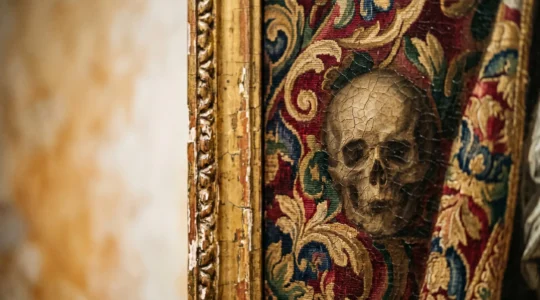
What Hidden Symbols in Famous British Paintings Have You Missed?
Contrary to popular belief, hidden symbols in art are not a simple dictionary of meanings; they are a calculated code revealing an artist’s secret agenda. Artists used objects as visual evidence to critique society, like Hogarth’s attack on the gin…
Read more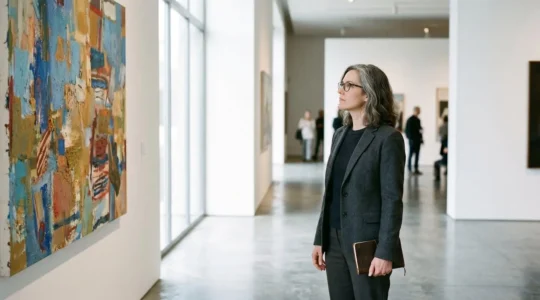
How to Write a Critical Art Review That Goes Beyond “I Liked It”
Contrary to common belief, powerful art criticism is not about expressing an opinion; it’s about executing a rigorous intellectual performance that proves an argument. A critic’s authority comes from a forensic methodology—dismantling an artwork’s technical, contextual, and institutional layers with…
Read more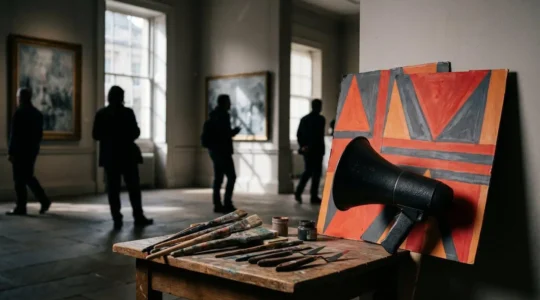
Can Socially Conscious Art Actually Drive Political Change in the UK?
Contrary to popular belief, the effectiveness of political art isn’t measured in headlines or shock value, but in its capacity for strategic subversion and genuine structural change. Disruptive protests, while publicly unpopular, successfully shift the political conversation and increase support…
Read more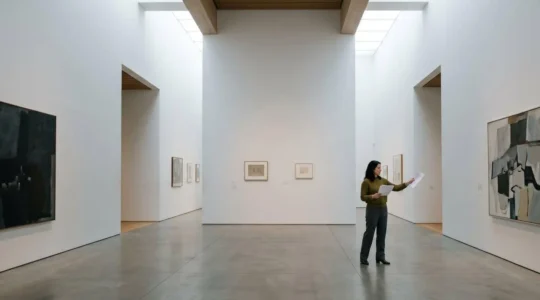
What Does a Modern Curator Actually Do beyond Selecting Artworks?
The modern curator’s job is less about selecting objects and more about architecting meaning through complex strategic, diplomatic, and ethical negotiations. Exhibitions are constructed narratives, using spatial grammar and storytelling, not just collections of items on a wall. The role…
Read more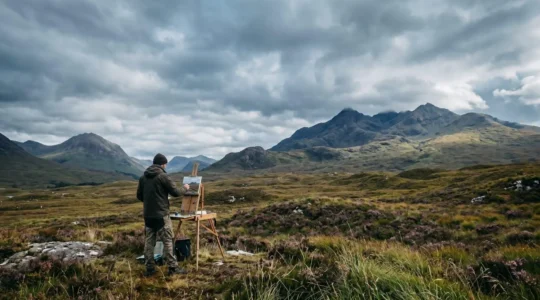
Why Are the Scottish Highlands Becoming the New Haven for Landscape Artists?
Contrary to the romantic ideal of capturing perfect, sun-drenched vistas, the true allure of the Scottish Highlands for contemporary artists lies elsewhere. It is not a passive landscape to be depicted, but an active collaborator in creation. This article explores…
Read more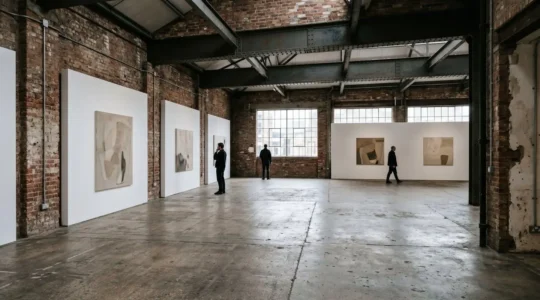
Which East London Galleries Should You Visit for Cutting-Edge Art this Weekend?
Forget the tourist map; experiencing East London’s real art scene isn’t about which galleries you visit, but how you discover them. The true creative energy lies in the artist-run ecosystems and transient street art, not just the established commercial spaces….
Read more