Cultural news
The UK art world is experiencing a period of profound transformation. From auction houses navigating economic headwinds to museums reimagining how they engage digital-native visitors, the cultural landscape is shifting beneath our feet. Whether you’re a collector tracking market movements, an artist grappling with post-Brexit paperwork, or simply someone who loves visiting galleries, understanding these changes helps you make informed decisions and spot emerging opportunities.
This landscape encompasses far more than exhibitions and openings. It includes the regulatory frameworks governing art movement across borders, the funding mechanisms sustaining independent projects, the policy debates determining which institutions thrive, and the ethical questions surrounding heritage and ownership. Each of these threads connects to create the complex tapestry of contemporary cultural news, and each deserves careful examination.
The UK Art Market: Resilience Amid Economic Uncertainty
While much of Europe faces economic challenges, the UK visual arts market continues to demonstrate surprising strength. Understanding what drives this resilience reveals much about where the sector is headed and which opportunities merit attention.
Why Auction Houses Sustain Premium Prices
London’s major auction houses have maintained robust sales despite recessionary pressures elsewhere. This phenomenon reflects several interconnected factors: the city’s established reputation as a trusted marketplace, the concentration of international wealth seeking tangible assets during volatile periods, and sophisticated marketing strategies that create urgency around marquee lots. Auction houses cultivate year-round relationships with collectors rather than simply staging seasonal sales, ensuring a steady pipeline of consignments even when broader confidence wavers.
Niche Sectors Experiencing Growth
Not all categories perform equally. Recent analysis suggests certain segments are seeing valuations climb by approximately 20% or more. These include works by underrepresented artists whose critical recognition is accelerating, pieces from specific regional movements gaining scholarly attention, and artworks in media experiencing renewed collector interest. The secondary market for Young British Artists, once considered settled, may be approaching a new peak as these artists enter their mature phases and institutions seek to fill collection gaps.
Strategic Selling Decisions
For those holding contemporary British art, the choice between selling in London or New York involves weighing factors beyond hammer prices. Consider tax implications, shipping logistics, buyer demographics for specific artist categories, and the timing of major fairs. A work that performs exceptionally well in London may find a more competitive market in New York if the artist has recently exhibited there, and vice versa. Currency fluctuations add another variable that savvy sellers monitor closely.
How Brexit Complicated Cross-Border Art Movement
The UK’s exit from the European Union introduced substantial new friction to what was previously seamless movement of artworks. Artists, galleries, and collectors now navigate a landscape of permits, declarations, and potential delays that require advance planning.
Shipping a painting to Paris now involves considerations previously unnecessary. VAT and tariff calculations have become complex, with different rates applying depending on the artwork’s age, value, and intended use. Temporary exports for exhibitions require an ATA Carnet, an international customs document that serves as a passport for goods. Obtaining one involves fees, processing time, and meticulous inventory documentation. Many artists report that the paperwork burden has caused them to decline European exhibition opportunities, a phenomenon sometimes called « paperwork fatigue » that risks isolating UK artists from continental networks.
The Dover border has become a particular bottleneck. Art shippers planning deliveries to European fairs must now account for potential customs delays that can stretch to several days during peak periods. Temperature-sensitive works or time-critical installations require backup plans and contingency shipping windows. Some collectors and galleries have turned to freeports and bonded warehouses as storage solutions that defer or avoid double taxation when works move between jurisdictions, though these facilities carry their own costs and accessibility considerations.
Museums and Galleries Adapting to New Audiences
Heritage institutions face an imperative to modernize or risk irrelevance, particularly among visitors under 25 who expect interactive, personalized experiences rather than passive observation.
Digital Transformation and Access
Static exhibits increasingly fail to capture younger attention spans. Forward-thinking museums are investing in digital layers that complement physical collections: augmented reality experiences that bring context to artworks, online archives accessible to researchers worldwide at no cost, and social media strategies that extend exhibitions beyond gallery walls. The British Museum’s digital archive initiative, for instance, allows anyone with internet access to explore holdings that physical visits could never encompass, democratizing scholarship and building connections with global audiences.
Membership Tiers and Value Propositions
For frequent visitors, the calculation between membership cards and single tickets involves more than simple arithmetic. Member versus Patron tiers offer escalating benefits:
- Standard membership typically pays for itself after three to four visits annually and includes exhibition discounts
- Patron levels add private views, exclusive lectures, and behind-scenes access that create community
- Family memberships often represent the best value for those visiting with children regularly
The intangible benefits—supporting institutions you value, feeling part of a cultural community—often outweigh the purely financial considerations for committed art enthusiasts.
Funding Digital Upgrades
The capital required for technological modernization must come from somewhere. Institutions weigh grants from bodies like the Arts Council against cultivating private donors who may attach specific expectations to their contributions. Grant funding typically requires demonstrating public benefit and may restrict how funds are allocated, while private philanthropy can offer flexibility but potentially influence programming decisions. The most resilient institutions diversify their funding sources to maintain independence while pursuing ambitious upgrades.
Cultural Policy and Funding Under Scrutiny
Recent policy shifts are reshaping which regions receive support and how institutions demonstrate their value to funders and communities.
The « Levelling Up » agenda promises to redirect arts funding beyond the traditional London concentration. Whether this redistribution is genuinely occurring remains debated. Regional institutions in cities like Manchester, Liverpool, and Glasgow are seeing increased grant opportunities, but skeptics note that major institutions still command disproportionate resources. For individual artists and small organizations, understanding where funding is more accessible—London versus the regions—can inform strategic decisions about where to base projects.
Diversity standards are evolving, with institutions navigating between quota-based approaches and organic change. Funders increasingly scrutinize not just collection diversity but also staff composition, programming choices, and community engagement. Grant applications that demonstrate thoughtful approaches to inclusivity have clearer paths to approval than those treating it as an afterthought.
The free entry model that distinguishes British museums globally faces occasional threats. Economic pressures lead some to float the idea of reintroducing admission charges, sparking fierce debate about access, equity, and mission. Meanwhile, union disputes occasionally impact opening hours, reminding visitors that institutional stability depends on fair employment practices as well as adequate funding.
The Deaccessioning Controversy: When Museums Sell Art
Perhaps no cultural news topic generates more passionate debate than museums selling works from their permanent collections to raise operating funds.
The Legal and Ethical Framework
Can a public museum legally sell a donated painting in the UK? The answer is nuanced. While not absolutely prohibited, strong professional guidelines from bodies like the Museums Association discourage deaccessioning except in narrow circumstances: refining collections, acquiring works that better serve the mission, or (more controversially) addressing urgent financial needs. Donated works often come with explicit or implicit expectations of perpetual stewardship, creating moral obligations beyond legal restrictions.
Financial Pressures Driving Sales
Rising electricity bills, reduced public funding, and deferred maintenance create genuine crises. Some institutions frame selling a single high-value masterpiece as necessary to « keep the lights on » literally and figuratively. Critics counter that this sets a dangerous precedent—if one work can be sold, what prevents the gradual emptying of collections? The slippery slope argument gains force when multiple institutions adopt similar strategies simultaneously.
Community and Cultural Attachment
Perhaps the most overlooked aspect is local community attachment to specific works. A painting that holds modest monetary value might be deeply woven into a town’s identity, featured in school curricula, or central to community events. Selling it may make financial sense on a spreadsheet while inflicting cultural harm that’s harder to quantify. Museums that fail to consult stakeholders before deaccessioning risk fierce backlash and reputational damage.
Alternative models are emerging. Could museums co-own works instead of selling them outright, maintaining access while sharing costs? Could regional consortia pool resources to save at-risk pieces? These creative solutions require cooperation and imagination but may preserve both financial sustainability and cultural heritage.
London’s Evolving Global Position
The perennial question—is London still the undisputed art world capital?—demands regular reassessment as other cities compete aggressively.
Frieze London remains a must-attend event for global collectors, demonstrating the city’s convening power. Yet blue-chip galleries are simultaneously opening spaces in Paris, attracted by supportive cultural policy and lower operating costs. The comparison between Mayfair’s premium rents and alternative models like Cromwell Place, a gallery co-working concept, shows how London dealers are adapting to economic realities without abandoning the city entirely.
Online viewing rooms, accelerated by recent necessity, have reduced the imperative for physical London presence. Collectors worldwide can preview works, attend virtual walkthroughs, and complete purchases without traveling. This democratizes access but potentially diminishes London’s role as an essential physical hub. The competition between London and Hong Kong for auction market dominance increasingly plays out in digital spaces as much as traditional salesrooms.
Despite these challenges, London retains unique advantages: legal frameworks trusted internationally, deep expertise concentrated in specialist advisors, and cultural infrastructure built over centuries. The city’s position is evolving rather than eroding, shifting from unchallenged dominance to competitive leadership.
Navigating cultural news requires understanding how these various threads—market dynamics, policy changes, technological shifts, ethical debates—interweave to create the environment in which artists create, institutions operate, and audiences engage. Staying informed empowers you to make better decisions, whether you’re planning gallery visits, considering purchases, applying for funding, or simply deepening your appreciation of the forces shaping the art you love. The landscape will continue changing; understanding the patterns helps you anticipate what comes next.
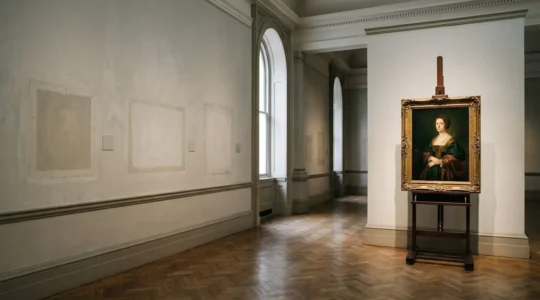
Why Are UK Museums Controversially Selling Permanent Acquisitions to Survive?
Selling museum art to pay the bills isn’t a lifeline; it’s a Faustian bargain that trades temporary financial relief for the permanent loss of institutional integrity. Ethical frameworks and UK law strictly forbid selling collections to cover operational deficits, viewing…
Lire la suite
Is London Still the Undisputed Capital of the Art World Post-Pandemic?
London’s leadership in the art world is not diminishing but fundamentally restructuring; its continued dominance relies on systemic adaptation rather than historical prestige. Market resilience is driven by innovative real estate models and a powerful, self-reinforcing talent ecosystem. While Paris…
Lire la suite
How to Secure Arts Council Funding for Independent Projects in a Competitive Climate?
Securing arts funding isn’t about changing your art, but strategically translating it into the language of impact and viability that funders need to see. Align your project’s narrative with the specific strategic goals of funders like Arts Council England, particularly…
Lire la suite
The Artist’s Post-Brexit Roadmap: How to Navigate Art Shipping to the EU
In summary: Brexit has added significant costs (VAT, tariffs) and paperwork (ATA Carnets), but these are manageable with proper planning. Strategic scheduling, including time buffers and exploring alternative routes to Dover, is now non-negotiable for meeting deadlines. Mastering the new…
Lire la suite
Which Major Shifts in UK Cultural Policy Will Impact Art Lovers This Year?
Beneath the headlines of funding cuts and diversity targets, a deliberate political recalibration of the UK’s cultural landscape is underway, forcing a high-stakes confrontation between institutional survival and ethical principles. The « Levelling Up » agenda promises geographic rebalancing but is undermined…
Lire la suite
How Are British Heritage Museums Modernizing to Attract Gen Z Visitors?
To attract Gen Z, British museums must evolve from being static temples of artifacts into dynamic platforms for cultural dialogue and co-creation. Static, one-way exhibits fail to meet Gen Z’s expectation for participation and interactivity, leading to disengagement. Modernization requires…
Lire la suite
Decoding Resilience: Why the UK Visual Arts Market Outperforms Europe Despite Economic Headwinds
The UK art market’s resilience is not a matter of chance but the result of a sophisticated system of managed stability that actively insulates it from economic shocks. London’s top auction houses leverage strategic consignments and financial guarantees to maintain…
Lire la suite
How to Plan the Ultimate 10-Day Art Tour Across the UK?
The secret to an unforgettable UK art tour is treating it like a curatorial project, focusing on logistical strategy as much as the art itself. Success lies in venturing beyond London to cities like Bristol, Glasgow, and Liverpool, each offering…
Lire la suite