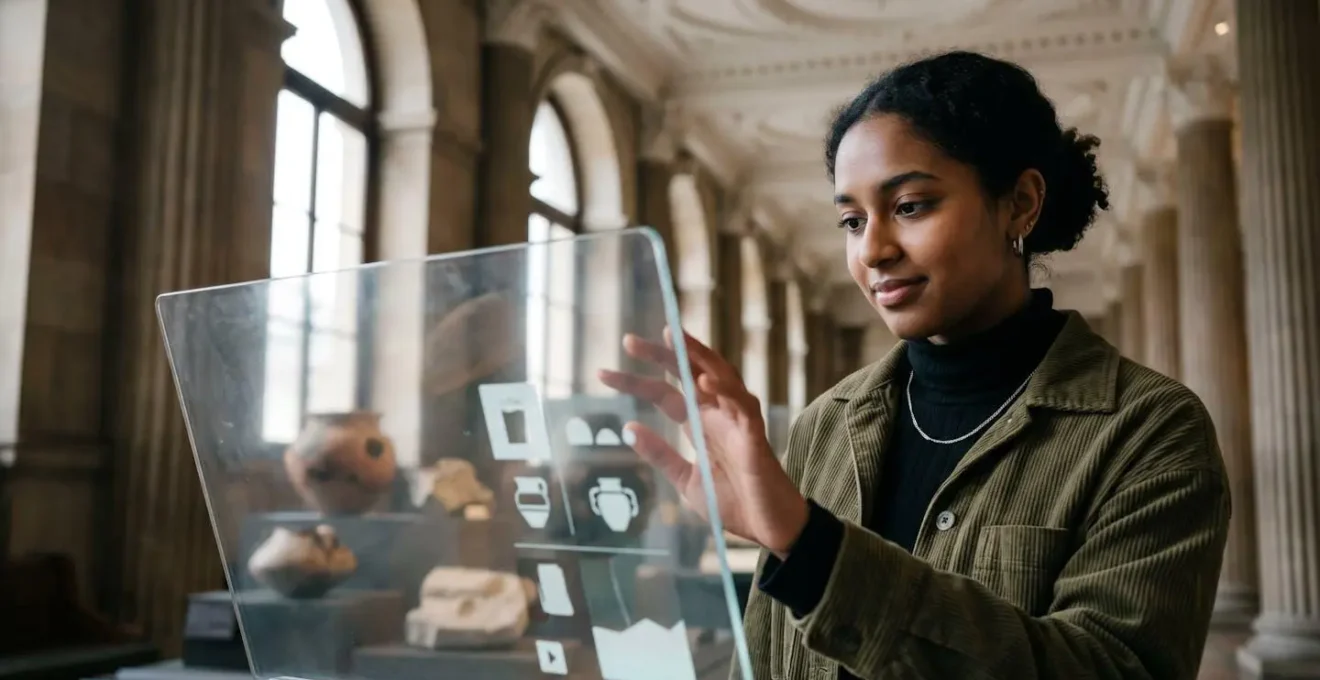
To attract Gen Z, British museums must evolve from being static temples of artifacts into dynamic platforms for cultural dialogue and co-creation.
- Static, one-way exhibits fail to meet Gen Z’s expectation for participation and interactivity, leading to disengagement.
- Modernization requires structural changes in curation, funding, and diversity, not just superficial tech updates or social media trends.
Recommendation: Shift the curatorial mindset from gatekeeper to facilitator, using digital tools not as gimmicks, but as bridges for authentic conversation and community building.
The hushed halls of Britain’s great museums, from the British Museum to the V&A, have long stood as monuments to history, culture, and quiet contemplation. For generations, their authority was unquestioned, their collections a one-way broadcast of heritage to a passive audience. But the visitor of tomorrow, the Gen Z digital native, is not a passive recipient. They are a creator, a commentator, and a participant. The challenge facing these institutions is not merely about attracting a younger demographic; it’s a fundamental reckoning with their own operational model in an age of interactivity.
The standard advice often circles around predictable tactics: launch a TikTok channel, create an “Instagrammable” photo op, or dabble in virtual reality. While not without merit, these are surface-level treatments for a deep, structural issue. They mistake the tool for the strategy. The core of the disconnect lies in the clash between the traditional museum’s role as a static authority and Gen Z’s innate desire for dialogue, authenticity, and participation. This generation doesn’t just want to see history; they want to talk back to it, remix it, and find their own place within its narrative.
So, what if the key to modernization isn’t just about adding new digital layers onto old structures, but about fundamentally rethinking the museum’s purpose? This analysis moves beyond the platitudes to explore a more profound shift: transforming the museum from a “temple of artifacts” into a “platform for dialogue.” This approach requires a strategic overhaul of everything from exhibit design and funding models to the very definition of a modern curator’s job.
This article will dissect the critical challenges and strategic solutions for British heritage institutions. We will explore the psychological reasons behind Gen Z’s disengagement, analyze funding and ethical dilemmas, and redefine the roles necessary to build a museum that is not just visited, but actively engaged with by a new generation.
Summary: Remodeling Heritage: A Strategic Guide to Engaging Gen Z
- Why Do Static Exhibits Fail to Engage Visitors under 25?
- How to Access the British Museum Archives Online for Free Research?
- Grants or Private Donors: Which Funding Source Best Supports Digital Upgrades?
- The Repatriation Debate: How Institutions Balance Heritage and Ethics Today?
- Member vs Patron: Which Tier Offers the Best Value for Frequent Visitors?
- Gamification: Why Interactive Portraits Teach History Better to Kids?
- Quotas or Organic Change: How Are Institutions Meeting New Diversity Standards?
- What Does a Modern Curator Actually Do beyond Selecting Artworks?
Why Do Static Exhibits Fail to Engage Visitors under 25?
The classic museum experience is built on a foundation of observation. Visitors are expected to move quietly through galleries, read plaques, and absorb information broadcast by the institution. This model is fundamentally at odds with the cognitive wiring of Gen Z. To understand the disconnect, one must first accept the environment they inhabit; research shows that many young people spend upwards of seven hours daily on screens, an environment defined by interactivity, user-generated content, and constant dialogue. The passive “look but don’t touch” ethos of a traditional gallery feels alien and restrictive.
This is not a matter of short attention spans, but a demand for a different kind of engagement. Static exhibits position the visitor as a pure consumer of information, a role this generation has actively rejected in every other aspect of their digital lives. They are accustomed to being part of the conversation, whether by commenting, sharing, or creating their own content in response. An exhibit that offers no channel for participation or response feels incomplete and, ultimately, uninteresting.
Gen Z values participation over observation. The generation that has grown up creating content, contributing to online communities, and shaping the platforms they inhabit—this generation is deeply uncomfortable with the pure observer role that traditional museum design assigns to visitors.
– Museum engagement research, VRashwa Museum Engagement Study
Therefore, the failure of static exhibits is not a failure of the artifacts themselves, but a failure of the medium. An object behind glass with a descriptive label is a monologue. To engage a generation fluent in the language of dialogue, museums must find ways to turn that monologue into a conversation. This involves creating experiences that invite reaction, interpretation, and even co-creation, transforming the visitor from a passive observer into an active participant in the cultural narrative.
How to Access the British Museum Archives Online for Free Research?
A crucial step in transforming the museum into a platform for dialogue is radical accessibility. Providing open, unfettered access to collections is a powerful statement that an institution trusts the public to engage with its heritage. The British Museum has made significant strides in this area, moving beyond its physical walls to become a vast digital resource. The strategy here is not just about digitization; it’s about empowering researchers, students, and the curious public to forge their own paths through history. A key part of this strategy is that the British Museum’s collection online provides access to almost five million objects, all available for exploration without a fee.
This level of access fundamentally changes the relationship between the institution and the public. It shifts the museum from a gatekeeper of knowledge to a facilitator of discovery. Rather than presenting a single, curated narrative, it offers the raw materials for countless new stories to be told. For a professional audience, understanding how to navigate and leverage these digital archives is no longer a peripheral skill but a core competency in modern cultural research. The following checklist provides a clear pathway for utilizing this powerful tool for free and open research.
Your Action Plan: Navigating the British Museum’s Digital Collection
- Initial Exploration: Visit the British Museum Collection online portal. You can browse freely without any registration, making it an instantly accessible starting point for any inquiry.
- Targeted Search: Utilize the advanced search functionality. Filter the vast repository of over two million records using keywords, object types, materials, or cultures to pinpoint specific items of interest, complete with high-definition, zoomable imagery.
- Specialized Access: For deep scholarly work, book an appointment via email to access the physical Library and Archive. While registration is required for in-person study rooms, this complements the digital offering with access to primary documents.
- Creative Reuse: Download high-resolution images for your own projects. Many are available under a Creative Commons license (CC BY-NC-SA 4.0), allowing for non-commercial educational and creative reuse, which is key for teaching and content creation.
- Curated Scholarship: Explore the thematic Online Research Catalogues. These resources combine peer-reviewed essays with curated object selections, offering a model of how digital collections can be used for deep scholarly engagement.
By mastering these digital access points, researchers and enthusiasts can engage with the collection on their own terms, demonstrating the power of an open-access model to foster a more democratic and participatory relationship with cultural heritage.
Grants or Private Donors: Which Funding Source Best Supports Digital Upgrades?
Funding digital transformation in heritage institutions is a complex challenge that requires a blended, strategic approach. The traditional reliance on public grants versus the pursuit of private philanthropy presents a critical choice, as each stream comes with distinct advantages and constraints. Public grants, often from bodies like the Arts Council, provide legitimacy and are typically awarded for well-defined projects with clear public outcomes. However, they can be bureaucratic, slow-moving, and prescriptive, often funding proven technologies rather than high-risk, high-reward innovation—the very kind needed to genuinely engage Gen Z.
Private donors and corporate partners, on the other hand, can offer more flexibility and a higher appetite for risk. A visionary patron might be more inclined to fund a speculative R&D lab or a “digital artist-in-residence” program than a government body that requires predictable KPIs. According to one report focusing on US institutions, private donors contribute an average of 30% of museum revenue, highlighting their significant role. This funding is often relationship-driven, allowing for a more agile and responsive approach to innovation. However, it can also come with the risk of mission drift if a donor’s interests are not perfectly aligned with the museum’s strategic goals.
The optimal strategy is not an “either/or” but a “both/and” approach. The most successful digital upgrades are supported by a diversified funding portfolio. Grants can provide the stable, foundational funding for large-scale infrastructure projects like collection digitization. Simultaneously, private philanthropy can be targeted to fuel the experimental, agile projects that push creative boundaries. This hybrid model allows museums to balance stability with innovation, using public funds to secure the base and private funds to reach for the future, ensuring digital initiatives are both sustainable and cutting-edge.
The Repatriation Debate: How Institutions Balance Heritage and Ethics Today?
The debate over the repatriation of cultural artifacts, particularly concerning iconic objects in British museums, is a central ethical challenge of our time. For museum professionals, it represents a profound tension between the legal mandate to preserve a collection and the growing moral and public pressure for restitution. This is not just a theoretical discussion; it directly impacts institutional reputation, especially among younger, ethically-minded audiences like Gen Z, who prioritize social justice and decolonization. An institution’s stance on this issue is a powerful signal of its values and its willingness to engage in difficult but necessary cultural dialogue.
For the British Museum, this tension is codified in law. As Addison Speier, writing for an art history journal, points out, the institution’s hands are largely tied by its founding legislation. This creates a complex dynamic where moral arguments for restitution run up against firm legal barriers. This is a crucial point for any analysis on the topic, as a detailed review confirms that British legislation has made it so the British Museum has specific instances where it can legally dispose of objects, but moral claims alone are insufficient.
Case Study: The British Museum’s Legal Framework on Repatriation
The British Museum is primarily governed by the British Museum Act of 1963, which strictly prohibits it from deaccessioning—or permanently removing—objects from its collection, except in very specific cases like the object being a duplicate or unfit for retention. This legal constraint is the central pillar of its long-standing position on contested artifacts. While the Charities Act 2022 introduced new provisions that could theoretically open a door for repatriation for some institutions, the UK government has indicated its intention to exclude national museums like the British Museum from these clauses. This creates an ongoing and highly publicised friction between the museum’s legal obligations and the powerful ethical arguments for restitution, placing the institution in a perpetually defensive posture.
Balancing heritage and ethics today requires moving beyond a defensive, legalistic stance towards proactive engagement. While deaccessioning may be legally blocked, institutions can pursue other avenues like long-term loans, collaborative research with source communities, and digital repatriation. These actions demonstrate a commitment to ethical stewardship and a willingness to share authority, which are far more resonant with modern audiences than simply citing prohibitive legislation. This path allows institutions to acknowledge historical wrongs and build new, more equitable relationships without violating their legal charters.
Member vs Patron: Which Tier Offers the Best Value for Frequent Visitors?
Museum membership programs have traditionally been designed for a specific type of loyalist: the frequent visitor. These models, often tiered from a basic “Member” to an elite “Patron,” offer escalating benefits like free entry, shop discounts, and exclusive previews. However, the demographic data for this core audience reveals a strategic vulnerability. An analysis from the American Alliance of Museums shows a striking trend: the median age of frequent museum visitors is 67 for art museums and 64 for history museums. The current value proposition is perfectly tuned to an older, more traditional audience, but it is fundamentally misaligned with the behaviors of Gen Z and Millennials.
Younger audiences visit cultural institutions more sporadically, often driven by specific exhibitions, social events, or the desire for a unique experience rather than habitual loyalty. A high-cost annual membership offers poor value for someone who might only visit once or twice a year. The rigid structure of Member vs. Patron tiers fails to capture this large segment of casual but interested visitors. A comparative analysis of visitor patterns makes this disconnect starkly clear.
| Visitor Category | Frequency Pattern | Age Group | Percentage of Museum Visitors |
|---|---|---|---|
| Frequent Visitors (Art Museums) | Regular/Repeat visits | 60+ years | Highest percentage |
| Frequent Visitors (History Museums) | Regular/Repeat visits | 60+ years | Highest percentage |
| Casual/Sporadic Visitors | Occasional visits | 40s demographic | Typical pattern |
| Millennials & Gen Z (with children) | Sporadic | Under 40 | 50-60% of casual visitors |
| Millennials & Gen Z (childless) | Sporadic/Rare | Under 40 | 17% (art) / 24% (history) |
To capture the immense potential of this younger, sporadic audience, museums must innovate beyond traditional tiers. The solution lies in creating flexible, experience-based models. This could include options like a “pay-per-exhibit” digital pass, a lower-cost “Supporter” tier that offers exclusive online content instead of free entry, or a “social membership” for two that includes event tickets. The goal is to create lower-friction entry points that acknowledge and reward engagement without demanding the high commitment of an annual pass, thereby building a broader, more diverse community of supporters.
Gamification: Why Interactive Portraits Teach History Better to Kids?
Gamification in a museum context is often misunderstood as simply adding games or leaderboards to an exhibit. Its true power, however, lies in its ability to embed narrative and learning through action. When a child interacts with a “gamified” portrait—perhaps by solving a puzzle to reveal hidden details about the subject’s life or making choices that affect a narrative outcome—they are not just passively receiving facts. They are actively participating in the process of historical discovery. This hands-on engagement forges a far deeper and more emotional connection to the subject matter than reading a static plaque.
The pedagogical principle at work is a shift from declarative knowledge (knowing *what*) to procedural knowledge (knowing *how*). An interactive portrait can simulate the constraints and decisions of a historical figure, allowing the visitor to experience the stakes firsthand. As one academic analysis on the subject explains, this is the core of effective educational design in museums. A thesis from Syracuse University confirms that gamification embeds narrative through doing, fostering a connection that goes beyond simple fun. It’s about using game mechanics to make history a lived experience.
This approach is particularly effective for teaching complex or abstract historical concepts. For example, an interactive exhibit could have a child manage a budget for a Victorian household or make diplomatic choices as a historical leader. The consequences of these choices provide immediate, tangible feedback. The learning becomes intuitive and memorable because it is tied to an action and its outcome. By embracing narrative-driven interactivity, museums can transform static artifacts into dynamic teaching tools, turning history from a collection of facts to be memorized into a series of problems to be solved and stories to be experienced.
Quotas or Organic Change: How Are Institutions Meeting New Diversity Standards?
As heritage institutions face mounting pressure to reflect the diversity of modern Britain, they are confronted with a strategic choice: implement change through mandated quotas or foster it through a more gradual, organic process. Quotas—for staffing, acquisitions, or exhibition programming—offer a direct and measurable way to address historical imbalances. They send a clear signal of intent and can force rapid progress in areas that have been resistant to change. However, they also risk being perceived as tokenism, especially if they are not supported by deeper cultural shifts within the institution.
The core of the issue is authenticity. Gen Z, in particular, is highly attuned to the difference between performative gestures and genuine structural change. As one engagement study notes, this generation has a keen ability to detect “woke-washing.”
Beyond performative representation: Gen Z detects ‘woke-washing.’ The difference between superficial diversity (one-off exhibits) and structural change (diverse curatorial staff, community co-creation) is why only the latter builds long-term trust.
– Museum diversity analysis, Gen Z Museum Engagement Study
This highlights the limitations of a purely quota-driven approach. While a quota might change the numbers, it doesn’t necessarily change the power dynamics. The alternative, organic change, focuses on cultivating a genuinely inclusive culture from the ground up. This involves investing in community co-creation programs, diversifying curatorial staff not just by numbers but by influence, and embedding inclusive principles into every aspect of the museum’s operation. This path is slower and harder to measure, but it leads to a more sustainable and authentic transformation. A recent survey underscores the urgency, as it found that the average Gen Z engagement score for museums was just 12 out of 30 points, indicating a massive gap in connection.
The most effective strategy likely combines both approaches. “Soft quotas” or ambitious targets can provide the necessary momentum and accountability, while a simultaneous focus on structural inclusion ensures the changes are meaningful and lasting. This means not just asking “how many?” but also “who has the power to make decisions?” and “who are we in conversation with?”. Only by addressing these deeper questions can institutions build the long-term trust required to meet and exceed modern diversity standards.
Key Takeaways
- Gen Z’s engagement hinges on participation, not passive observation. Museums must shift from being content broadcasters to dialogue facilitators.
- Digital access is non-negotiable. Opening up archives, as the British Museum has, transforms the institution into a platform for public discovery and co-creation.
- Authenticity is paramount. Both in funding innovation and in addressing diversity, performative gestures are easily detected and rejected; structural change is what builds trust with younger audiences.
What Does a Modern Curator Actually Do beyond Selecting Artworks?
The traditional image of a curator is that of a solitary scholar, a gatekeeper of taste who selects and interprets objects from within the museum’s walls. In the 21st century, this role has become radically insufficient. To connect with a digitally native audience, the modern curator must evolve into a multi-faceted role: part storyteller, part community manager, part digital strategist, and part event producer. Their work is no longer confined to the gallery space; it extends across every platform where their audience gathers.
This expanded role is about facilitating dialogue. According to the American Alliance of Museums, millennial and Gen Z users have over nine social media accounts each, a fact that requires curators to think in terms of multi-channel narratives. An exhibition is no longer a singular event but the centerpiece of a sprawling conversation that takes place on Instagram, in blog posts, through video content, and via interactive apps. The curator’s job is to orchestrate this conversation, ensuring it is cohesive, engaging, and authentic across all touchpoints.
Case in Point: The Curator as Digital Community Manager
The Brooklyn Museum’s development of a mobile app that allowed visitors to ask questions of staff in real-time is a powerful example of this new curatorial model. With text chats averaging 13 messages long, the initiative demonstrated a profound shift from one-way interpretation to ongoing, responsive dialogue. In this context, the curator is not just the expert with all the answers but a facilitator who sparks curiosity and guides a conversation. They must manage a community, respond to inquiries, and adapt their storytelling to meet the audience’s immediate interests, effectively becoming a digital-first cultural facilitator.
Ultimately, the modern curator’s primary function is to build bridges—between the object and the audience, between the physical and the digital, and between the institution and the community. Their success is no longer measured solely by the scholarly rigor of their exhibitions, but by their ability to foster a vibrant, engaged community around the culture they steward. This requires a new skill set that blends deep subject matter expertise with digital fluency and a genuine passion for public engagement.
To truly modernize and attract the next generation of visitors, British heritage institutions must therefore look beyond their collections and focus on transforming their culture. The strategic imperative is to begin implementing these changes, rethinking roles, and embracing a model of open, participatory dialogue. Start by evaluating your institution’s own digital strategy not as a marketing tool, but as a core component of its curatorial and public-facing mission.