Contrary to the belief that “Slow Art” is simply a nostalgic trend, it represents a profound economic and cultural recalibration of value in response to digital acceleration.
- It reclaims the artist’s process, mental state, and time as integral components of the artwork’s worth, not just overhead costs.
- It elevates material consciousness, connecting a piece to its specific geography, history, and the legacy of its creator’s skills.
Recommendation: Whether you are a creator or collector, engaging with Slow Art means learning to value the story of creation as much as the final product itself.
In the relentless current of the digital age, our attention has become the ultimate commodity, fragmented into moments. We scroll through feeds, consuming images and ideas at a pace that precludes deep engagement. Art, too, has been swept into this vortex of immediacy. The experience of culture is often reduced to a quick glance, a double-tap, a fleeting impression before the next stimulus arrives. This frenetic consumption has created a world optimized for speed and volume, where production can be instantaneous and replication is effortless.
The common response to this phenomenon has been to advocate for “slowing down,” often interpreted as a simple act of looking at a painting for ten minutes instead of ten seconds. While movements like Slow Art Day, which now spans the globe from New York to Hong Kong, encourage this vital practice, this perspective only scratches the surface. It positions “slow” as a passive, remedial act—a corrective to our bad digital habits. But what if the Slow Art comeback is not merely a nostalgic sigh for a bygone era? What if it is something far more active, a quiet but powerful rebellion?
This article proposes a different view: the resurgence of Slow Art is an active philosophical and economic restructuring. It challenges the very definition of value that has been dictated by digital efficiency. It’s a movement that finds its power not in rejecting technology, but in championing what technology cannot replicate: the temporal sovereignty of the artist, the haptic knowledge of the hands, the narrative embedded in a material’s provenance, and the profound connection between creation and well-being. We will explore how this movement is reshaping value, from the weaver’s loom to the collector’s mindset.
This exploration will delve into the core tenets of the Slow Art ethos. We will examine how repetitive craft becomes a form of mindfulness, how artists can communicate the immense value of time, and why the origin of materials is becoming as important as the final form.
Summary: The Enduring Value of Process in a World of Instant Products
- Repetition and Flow: How Weaving Can Be a Form of Mindfulness?
- Hours vs Result: How to Explain the Cost of Hand-Stitched Art to Clients?
- Local Wool and Wood: Why Provenance Matters in Craft?
- The Mistake of Using CNC Machines to Fake Hand-Carving
- Apprenticeship: How to Pass on Dying Skills to Young Artists?
- The Mistake of Thinking Analog is Just Nostalgia: The Tactile Advantage
- How Can Self-Portraiture Serve as a Tool for Mental Health Recovery?
- Why Are the Scottish Highlands Becoming the New Haven for Landscape Artists?
Repetition and Flow: How Weaving Can Be a Form of Mindfulness?
The modern gallery experience often mirrors the frantic pace of digital life. In a world of infinite distraction, the average time a person spends looking at a piece of art in a museum is a mere 17 seconds, according to studies on viewing behavior. This is barely enough time to register an image, let alone connect with it. The slow art process offers a profound antidote, not just for the viewer but, most importantly, for the creator. Practices like weaving, with their rhythmic and repetitive motions, become a form of active meditation, an anchor in the storm of modern urgency.
This is not just a romantic notion; it is grounded in neuroscience. The act of passing a shuttle through the warp, thread by thread, demands a focused presence that quiets the anxious, multitasking mind. It grants the artist what can be called temporal sovereignty—the deliberate control over one’s own time and attention, pushing back against the demand for constant, rapid output. Each row of weaving is a small victory against distraction, a physical manifestation of focused thought. The resulting textile is not just an object; it is a record of time spent in a state of flow, a testament to the power of slow, deliberate action.
As neuroscientist Stan Rodski observes, this focused repetition has tangible benefits that extend far beyond the loom. It is an exercise in applied mindfulness that recalibrates our entire mental state.
simple, repetitive tasks, performed with focus and attention – mindfulness, in other words – can not only quieten our noisy thought processes and help us relax but also improve our outlook on life
– Stan Rodski, The Neuroscience of Mindfulness
Ultimately, the weaver’s practice demonstrates that the process is not a means to an end, but the end itself. It is a way of being in the world that values depth over breadth, and contemplation over consumption. The rhythm of the loom becomes the rhythm of a more centered mind.
Hours vs Result: How to Explain the Cost of Hand-Stitched Art to Clients?
One of the greatest challenges for artisans in the slow art movement is the translation of time into currency. In a market conditioned by mass production, how does one explain that a small, hand-stitched piece costs more than a large, factory-made item? The answer lies in a fundamental shift in perception: moving the conversation from price to value, from cost to story. This is not a niche concern; the global handicrafts market is projected to reach $983.12 billion by 2030, indicating a vast and growing appreciation for these goods.
The key is to treat the process as an integral part of the product. The final artwork is not just the object itself, but the sum of the hours of skilled labor, the years of practice behind the artist’s hands, the emotional and intellectual energy invested, and the story of the materials. Documenting this journey—through photographs, journals, or videos—transforms the artwork from a static object into a living narrative. It allows the client to see the hundreds of decisions, the thousands of stitches, and the patient accumulation of detail that constitute the final piece. This transparency is not an apology for the cost but a confident assertion of its inherent worth.
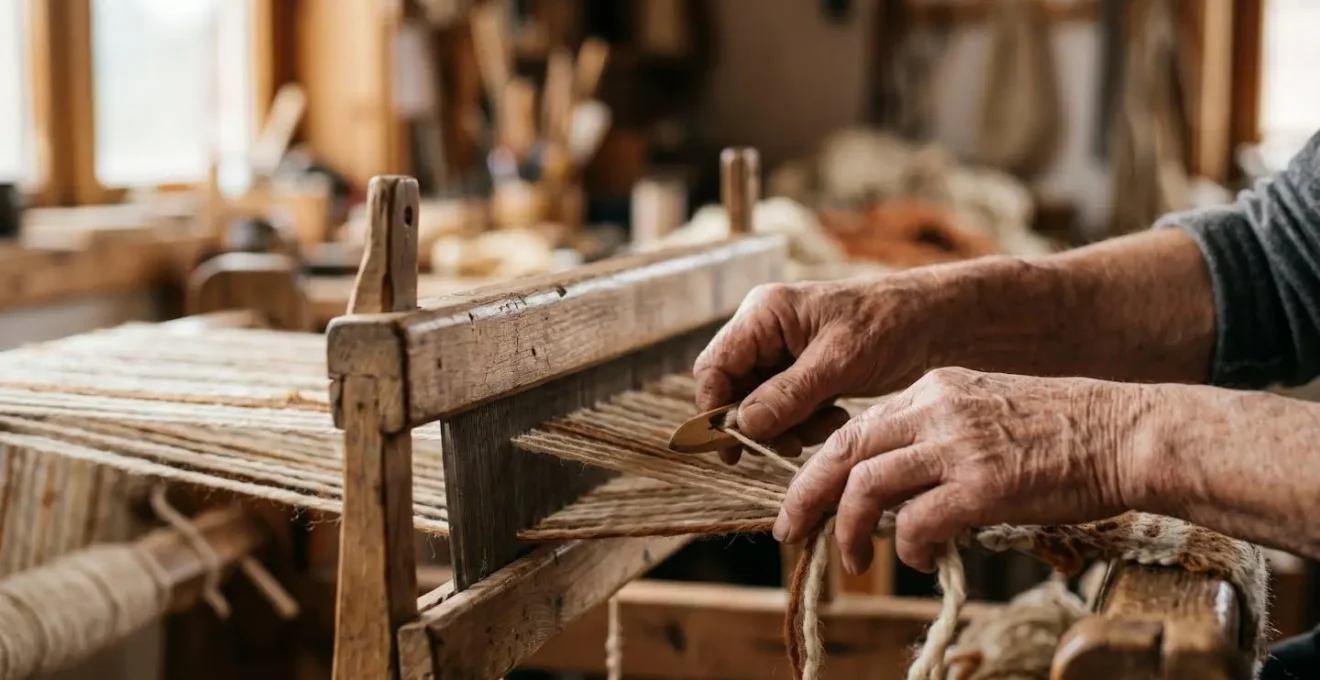
As this image suggests, the value is embedded in the entire ecosystem of creation. Educating a client is about a value calibration, helping them understand they are not merely buying a decoration, but acquiring a piece of the artist’s time, skill, and dedication. They are becoming stewards of a story, not just owners of an object. This reframing is essential for the sustainable future of craft.
Your Action Plan: Justifying Handcrafted Value
- Document Everything: Log your hours, photograph your process at different stages, and write down the story of your materials. These are your value assets.
- Create a “Process Sheet”: For each piece, provide a one-page summary that details the techniques used, hours invested, and the origin of key materials.
- Frame the Conversation: When discussing price, start with the story. “This piece took 40 hours of hand-stitching using linen I dyed with…” instead of “The price is X.”
- Offer Tiers of Value: Compare the unique, commissioned piece to smaller studies or prints to illustrate how time and complexity translate to cost.
- Build a Narrative Portfolio: Your website or portfolio should showcase not just final products, but also the journey, the studio, and the hands behind the work.
Local Wool and Wood: Why Provenance Matters in Craft?
In an era of globalized supply chains, where the origin of our goods is often an anonymous, distant factory, the slow art movement champions a radical alternative: material consciousness. This is the understanding that materials are not inert commodities but are imbued with history, geography, and culture. For a craftsperson, knowing whether their wood is from a storm-fallen oak in a local forest or their wool is from a specific flock of sheep is not a trivial detail; it is central to the soul of the work. The provenance of a material connects the finished object to a specific place on Earth, lending it a resonance and authenticity that mass-produced items can never achieve.
This focus on provenance is a powerful critique of the detachment inherent in fast production. It insists that the “where” and “how” of sourcing are as significant as the “what” of the final product. Using local wool, for example, supports local agricultural ecosystems, preserves heritage sheep breeds, and reduces the carbon footprint of the artwork. This commitment to sustainability and locality adds another layer of narrative to the piece. The artist becomes a collaborator with their environment, and the artwork becomes a testament to that relationship. The final object is not just made *of* wood or wool; it is a piece *of* a forest or a flock.
This connection between material and culture is deeply rooted in history, creating a thread that connects the contemporary artist to generations of their predecessors. The choice of material is a choice to participate in a cultural lineage.
Scottish and English wool have deep cultural significance, with the Scottish Highlands famous for their tartan patterns, woven from local wool, symbolizing clan identities and heritage
– WLLW Editorial, The Provenance of Craft: Natural Materials and Their Cultural Roots
Ultimately, provenance matters because it re-enchants the material world. It reminds us that the objects we live with have stories, and that those stories can connect us more deeply to the planet and to our own cultural heritage. In slow craft, a block of wood is never just a block of wood; it is a piece of a specific tree, from a specific place, with a specific story waiting to be told.
The Mistake of Using CNC Machines to Fake Hand-Carving
In the quiet rebellion of Slow Art, authenticity is paramount. This makes the rise of “inauthentic authenticity”—the use of technology to mimic the imperfections of the human hand—a particularly insidious threat. The most glaring example is the use of computer numerical control (CNC) machines programmed to replicate the tool marks of hand-carving. This practice is not an homage but a deception, a profound misunderstanding of what makes handcrafted objects valuable. It reduces the concept of “hand-made” to a surface-level aesthetic, completely missing the philosophical core of the movement.
The mistake is thinking that the value lies in the “look” of imperfection. In reality, the value of a hand-carved object lies in the haptic knowledge of the artist—the intuitive, non-replicable intelligence of the hands responding to the grain of the wood. Each mark is the result of a micro-decision, a physical negotiation between the artist’s intent and the material’s character. A CNC machine, no matter how sophisticated, can only execute a pre-written code. It has no feeling for the material, no history of practice, no moment of inspiration or happy accident. It produces a sterile echo of a process it cannot understand.
This attempt to fake the human touch represents the very ethos of “fast production” trying to wear the clothes of “slow art.” It seeks a shortcut to value, ignoring that in craft, the long way *is* the only way. Interestingly, the very uniqueness of the human hand may also provide the solution to verifying authenticity.
Case Study: Using Hand-Crafted Randomness for Authentication
In a compelling parallel, researchers at the University of Geneva developed an anti-counterfeiting system using what they call “hand-crafted randomness.” They found that the subtle, unrepeatable variations inherent in physical creation processes could be captured as a unique “fingerprint” for an object. This digital signature, linked to the physical item, allows a consumer to verify its authenticity with a simple mobile phone scan. This demonstrates a powerful concept: the irreducible complexity of the human touch, once seen as a variable to be eliminated by industry, can now be its most secure and verifiable asset against digital fakes.
Ultimately, to use a machine to fake a hand-carved piece is to value only the surface and discard the soul. It is a hollow victory that undermines the trust between creator and collector, which is the very foundation of the slow art economy.
Apprenticeship: How to Pass on Dying Skills to Young Artists?
If materials are the body of slow art, then skill is its soul. Many of the techniques central to traditional craft—from marquetry to lacemaking to hand-thrown pottery—are forms of haptic knowledge, passed down not through textbooks but through observation and embodied practice. This knowledge lives in the hands, not on a hard drive. As masters of these crafts age, there is a very real danger of this accumulated wisdom being lost forever. The question of how to pass these dying skills to a new generation of artists is therefore one of the most urgent challenges facing the slow art movement.
The traditional model of apprenticeship, where a young artist learns by working alongside a master for years, is a stark contrast to the modern art school curriculum, which often prioritizes conceptual development over technical mastery. Revitalizing apprenticeship requires a cultural shift. It means valuing mentorship as a creative act in itself and recognizing that teaching is a way of ensuring a craft’s immortality. It also requires creating economic structures that make apprenticeship a viable path for both mentor and apprentice. This is a global challenge, with governments and organizations now recognizing the scale of the issue; according to recent data, governments in over 60 countries support skill enhancement programs reaching nearly 18 million artisans globally.
Modernizing apprenticeship does not mean abandoning its core principles. It can involve leveraging technology for good—using digital archives to preserve techniques or online platforms to connect masters with students across the globe. But the heart of the exchange remains analog: the shared space of a workshop, the quiet correction of a hand’s position, the patient repetition of a difficult step. It is in these slow, personal interactions that the true essence of a craft is transmitted. It is how a lineage of knowledge is kept alive, ensuring that the art forms that have defined human culture for centuries will continue to thrive.
The Mistake of Thinking Analog is Just Nostalgia: The Tactile Advantage
In a culture saturated with sleek, frictionless digital interfaces, there is a tendency to dismiss the appeal of the analog world as mere nostalgia—a sentimental longing for a past that was, in reality, less convenient. But to view the resurgence of physical media, from vinyl records to hand-bound books and textile art, through this lens is to miss the point entirely. The preference for the analog is not about rejecting the future; it is about reclaiming a fundamental aspect of human experience: the sense of touch. This is the tactile advantage, and it is a powerful differentiator in a visually overloaded world.
A digital image of a woven blanket can show you its color and pattern, but it cannot convey the rough texture of the wool, the weight of the fabric, or the subtle warmth it holds. This haptic information creates a deeper, more multisensory connection to the object. It engages the body as well as the eyes, grounding us in the physical present. The slight imperfections in a hand-thrown pot or the visible grain in a piece of wood are not flaws to be tolerated; they are data points, transmitting information about the object’s creation and materiality. They invite us to touch, to explore, and to engage in a way that a smooth glass screen forbids.
This engagement is a form of “slow looking” that is deeply connected to our cognitive and emotional well-being. It is an act of sensory mindfulness that pulls us out of the abstract realm of thought and into the concrete reality of the here and now.
Slow looking intersects with ideas around mindfulness and well-being, comparing it to sensory mindfulness meditation where your focus of attention is in the moment and not on external ideas or thoughts
– Rebecca Chamberlain, Interview with Tate
Therefore, the love for analog is not about looking backward. It is about a desire for a richer, more complete sensory experience. It is a recognition that in our rush to digitize everything, we may have overlooked the profound intelligence and satisfaction that comes from the world we can actually touch.
How Can Self-Portraiture Serve as a Tool for Mental Health Recovery?
While much of the slow art discourse focuses on traditional crafts, its principles of introspection, patience, and process over product find a powerful application in the deeply personal practice of self-portraiture. In the age of the selfie—a fleeting, curated, and often idealized digital reflection—the slow, deliberate act of creating a self-portrait can become a radical tool for mental health recovery. It is a process of looking inward, of spending unfiltered time with oneself, not for an audience, but for the sake of self-understanding.
Unlike a quick snapshot, a painted, drawn, or stitched self-portrait requires hours of sustained observation. This extended gaze forces a confrontation with the self that is both challenging and therapeutic. It is an opportunity to see beyond the surface, to map the lines of one’s own face with honesty and compassion. The process can externalize internal states—anxiety, resilience, sorrow, joy—and give them form, making them tangible and, therefore, more manageable. It is an act of mindful self-creation, a way to reclaim one’s own narrative from the chaos of internal and external pressures. The rising interest in unique, personal artworks, with personalized handmade items accounting for around 12% of all handicraft sales in 2024, suggests a broader cultural desire for this kind of deep, individual expression.
This practice aligns directly with the neurological benefits of mindfulness. The sustained focus required for self-portraiture can actively reshape brain patterns, strengthening areas responsible for emotional regulation and self-awareness.
Mindful meditation changes the balance of brain activity between the higher order cortical regions responsible for attention and strengthens executive control over the activation of these attentional networks
– Max Planck Florida Institute for Neuroscience, How Does Mindfulness Change the Brain?
In this light, self-portraiture becomes more than an artistic exercise; it is a form of neurological self-care. It is the slow, deliberate work of rebuilding a relationship with oneself, one brushstroke, one pencil line, one stitch at a time. It is the ultimate act of seeing and being seen, by the one person who matters most: oneself.
Key Takeaways
- Process Over Product: The value of Slow Art lies not just in the final object, but in the hours of mindful labor, skill, and intention invested in its creation.
- Materiality is Meaning: The origin of materials (provenance) connects an artwork to a specific place, culture, and ecosystem, adding a layer of narrative that mass production cannot replicate.
- Authenticity Cannot Be Faked: The unique, unrepeatable “imperfections” of the human hand (haptic knowledge) are the true source of value, and attempts to mimic them with machines fundamentally miss the point.
–
Why Are the Scottish Highlands Becoming the New Haven for Landscape Artists?
It is perhaps no coincidence that in a time of digital saturation, artists are increasingly drawn to landscapes that feel ancient, elemental, and indifferent to human haste. The Scottish Highlands, with their dramatic weather, vast, open spaces, and deep-seated cultural history, are emerging as a modern haven for landscape artists seeking to reconnect with a slower, more profound way of working. This region offers more than just breathtaking views; it provides an entire ecosystem that aligns perfectly with the ethos of the slow art movement.
The appeal lies in a convergence of factors we have explored. Firstly, there is the material consciousness. The Highlands are the home of Harris Tweed and the source of unique wools and natural dyes, allowing artists to create work that is literally *of* the landscape they are depicting, as noted in the significance of Scottish wool. Secondly, the region embodies temporal sovereignty. The famously unpredictable weather forces artists to abandon rigid schedules and work in harmony with the elements, fostering patience and observation. An artist might spend days waiting for the right light, a process that is in itself a form of deep engagement with place.
Finally, the Highlands offer a palpable sense of history and a slower pace of life that provides a powerful antidote to the frantic energy of urban centers. It is a place where legacy is visible in the landscape, from ancient standing stones to the ruins of crofts. This environment encourages a contemplative practice, where the act of painting or drawing becomes a dialogue with time itself. For artists disillusioned with the demands of fast-paced digital production, the Highlands represent not an escape from the modern world, but a way to engage with it on deeper, more meaningful terms, making the landscape both their subject and their collaborator.
Ultimately, the comeback of Slow Art is not a regression. It is a sophisticated, necessary response to a world that has over-invested in speed at the expense of meaning. It is a quiet, determined rebellion that reminds us that the most valuable things—skill, attention, connection, and story—cannot be rushed. Begin by reassessing a single object in your life, not for its price, but for the story of its creation.