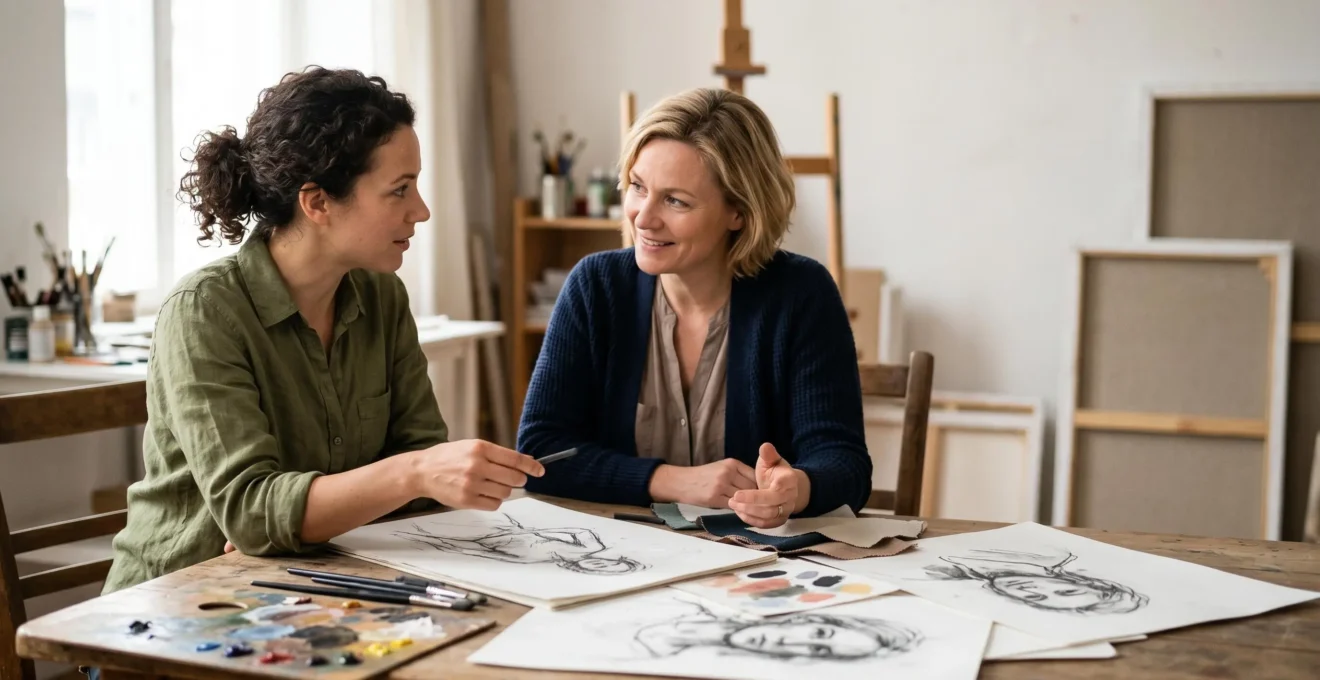
Commissioning a powerful portrait requires you to be an active co-creator, not a passive buyer; your strategic choices directly shape whether the final piece is a mere likeness or a true narrative artifact.
- Success hinges on aligning your vision with an artist’s style and a clear budget from the outset, treating the process as a collaborative project.
- The contract is a critical tool for defining expectations, from copyright to revision rounds, protecting both you and the artist.
Recommendation: Shift your mindset from “buying a painting” to “investing in a legacy,” and focus on finding an artist whose process and philosophy resonate with your goal of capturing psychological honesty.
Commissioning a portrait is one of the most personal and enduring investments you can make in art. In an age of fleeting digital images, a painted portrait offers a tangible sense of permanence, a legacy captured in oil, charcoal, or watercolour. Yet, many clients approach this process with a simple goal: to get a “good likeness.” They might look for an artist who can replicate a photograph with technical skill. This approach, however, often misses the very soul of portraiture.
The most common advice revolves around finding an artist you like and setting a budget. While true, this is only the starting point. The real challenge, and the greatest opportunity, lies in moving beyond a superficial resemblance to capture something far more elusive: personality, character, and the unspoken story of the subject. A truly great portrait isn’t just a face; it’s a presence. It’s the difference between a picture of Winston Churchill and a painting that conveys the weight of a nation on his shoulders.
But what if the key to achieving this depth wasn’t solely in the artist’s hands? This guide is built on a different premise: that the client is not a mere customer but a strategic partner. Your decisions—from the clothes you wear for the sitting to the clauses you insist on in the contract—are pivotal acts of co-creation. By understanding the process from a consultant’s perspective, you can actively steer the commission towards a result that is not just flattering, but profoundly true.
This article will provide a practical framework to navigate the key stages of a portrait commission. We will explore how to make informed decisions that transform a simple transaction into the creation of a meaningful narrative artifact. The following sections break down the essential elements, from shortlisting artists to understanding the impact of your choices on the final artwork.
Summary: A Strategic Guide to Commissioning a Timeless Portrait
- Style vs Budget: How to Shortlist Portraitists for Your Specific Vision?
- What Should You Wear (and Not Wear) for a Painted Portrait Sitting?
- Copyright and Deadlines: What Must Be Included in a Portrait Commission Contract?
- The Mistake of Asking for “Flattering” Changes halfway through the Process
- Oil vs Charcoal: How Does the Medium Affect the Price of a Commission?
- Hourly Rate or Fixed Fee: How to Price Your Portraits for the UK Market?
- Warm or Cool: How to Match Abstract Art with Your Wall Paint?
- What Defines a Successful Career for Professional Portraitists in the UK Today?
Style vs Budget: How to Shortlist Portraitists for Your Specific Vision?
The first step in any successful commission is creating a shortlist of potential artists. This is a delicate balance between your aesthetic vision and your financial reality. It’s tempting to find an artist and then ask for their price, but a more strategic approach is to define your budget range first. This doesn’t limit your vision; it focuses your search. In the UK, a professionally commissioned portrait can vary widely, but a 2024 Mall Galleries survey suggests a benchmark of £1,200 to £3,500 for a head and shoulders painting from an established artist.
With a budget in mind, you can begin the exciting process of exploring portfolios. Your initial reaction should be instinctive. As you browse websites and social media, don’t over-analyse technique. Instead, ask yourself: “Does this artist’s work move me? Do their subjects feel alive and present?” You are looking for a visual dialogue that resonates with you. Create a longlist of artists whose work elicits this connection. Then, contact your top three to five candidates for an initial, no-commitment consultation. This is your chance to discuss their philosophy, process, and how they approach capturing personality.
During these conversations, your goal is to find a partner, not just a service provider. Are they curious about the subject? Do they ask questions that go beyond the physical? A great portraitist is often part psychologist. They are interested in the character behind the face. Finally, always request a detailed quote that separates the artist’s fee from potential expenses like framing, travel, or shipping. Some artists may even offer a preliminary sketch for a smaller fee, which is an excellent low-risk way to test the creative chemistry before committing to a full-scale work.
What Should You Wear (and Not Wear) for a Painted Portrait Sitting?
Once you’ve selected your artist, one of your first strategic decisions as a co-creator is choosing the attire for the sitting. This choice is far more than a matter of fashion; it’s a narrative tool. The clothing, fabric, and colours you select will profoundly influence the mood, texture, and story of the final portrait. Avoid busy patterns, large logos, or overly trendy outfits that will quickly date the painting. The goal is timelessness. Instead, opt for classic garments with interesting textures and forms.
Think about how different materials interact with light. The way light falls on fabric can add incredible depth and character to a painting, becoming a key part of the composition. Rich textures like velvet, the subtle sheen of silk, the structured weave of linen, or the soft comfort of wool can all contribute to the portrait’s story. A formal suit can suggest authority and tradition, while a simple, soft sweater might convey intimacy and introspection. Discuss these options with the artist; they will have valuable input on how different fabrics and colours will translate into their chosen medium.
As the image above illustrates, the tactile quality of fabric is a powerful visual element. The deep pile of velvet creates dramatic shadows, while the flow of silk suggests movement and grace. Ultimately, the subject should wear something they feel comfortable and confident in. The clothing should feel like an authentic extension of their personality, not a costume. By choosing attire that tells a story, you provide the artist with a rich vocabulary to build a portrait that speaks to the subject’s character, not just their appearance.
Copyright and Deadlines: What Must Be Included in a Portrait Commission Contract?
While the creative process is built on trust and collaboration, the professional relationship must be grounded in a clear, comprehensive contract. This document is not a sign of mistrust; it is an essential tool for clarity and risk management for both you and the artist. A well-drafted contract prevents misunderstandings and ensures that the expectations for the final deliverable, timeline, and usage rights are mutually understood from the beginning.
One of the most critical and often misunderstood clauses is copyright. It’s a common misconception that the person who commissions and pays for the art owns the copyright. However, as legal experts at Plagiarism Today clarify, “Copyright, by default, goes to the original creator of a particular work.” This means unless a written agreement explicitly transfers rights to you, the artist retains the right to create reproductions, publish the image, and use it in their portfolio. Your contract must clearly define these terms. Do you want exclusive rights, or are you comfortable with the artist displaying the work? All of this is negotiable.
Other essential elements include a clear payment schedule (e.g., 50% upfront, 50% on completion), a defined timeline with key milestones, and clauses for revisions and cancellations. Specifying the number of revision rounds (e.g., one after the initial sketch, one during the painting process) and the cost for additional changes protects the project from scope creep. A “kill fee” clause, which defines a non-refundable payment if you cancel the project, fairly compensates the artist for their time and materials. By formalizing these points, you create a professional framework that allows the creative process to flourish with confidence and security.
Action Plan: Key Clauses for Your Commission Contract
- Copyright & Usage Rights: State clearly who retains copyright. Specify if the artist can use the image for their portfolio and if you have rights for reproduction.
- Payment Schedule & Total Cost: Detail the total fee, what it includes (e.g., materials, not framing), and the payment schedule (e.g., 50% deposit, 50% on delivery).
- Timeline & Milestones: Define the projected completion date and key check-in points, such as the initial sketch approval and a mid-process review.
- Revision & Approval Process: Specify the number of included revision rounds and the hourly rate or process for requesting further changes.
- Cancellation & Kill Fee: Outline the terms for cancellation by either party and the non-refundable portion of the fee to cover the artist’s work to date.
The Mistake of Asking for “Flattering” Changes halfway through the Process
As the portrait develops, there will be checkpoints for feedback. It is at this stage that many commissions falter. The temptation for a client—or the sitter themselves—is to request “flattering” changes: soften a wrinkle, slim a jawline, or remove a perceived imperfection. While seemingly minor, these requests can fundamentally undermine the goal of capturing true personality. The pursuit of airbrushed perfection often leads to a sterile, lifeless image, erasing the very marks of life and character that make a person unique.
A great portraitist is not a cosmetician; they are a storyteller seeking psychological honesty. They are trained to see beyond the surface and capture the complex mix of strength, vulnerability, joy, and weariness that defines a human being. Resisting the urge to “correct” their interpretation is a crucial act of trust in the artist you have chosen. You selected them for their unique vision, and interfering with that vision based on personal vanity can sabotage the entire project.
The history of art is filled with cautionary tales about this very tension. One of the most famous is the story of Graham Sutherland’s portrait of Winston Churchill.
Case Study: The Sutherland Churchill Portrait
Commissioned by the Houses of Parliament in 1954, Graham Sutherland’s portrait of Winston Churchill was intended to be a great honour. However, Churchill despised the finished work, complaining that it made him look “half-witted” and old. Sutherland had captured the weariness and fragility of an 80-year-old man who had carried the weight of a world war, but Churchill wanted an image of idealized vigour. The tension was so great that the painting, after being publicly unveiled, was hidden away and later famously destroyed by Churchill’s wife. This case starkly illustrates how the pursuit of a truthful, character-filled portrait can conflict with a sitter’s desire for a flattering image, and how that very “unflattering” truth is what often creates a powerful and historically significant narrative artifact.
This doesn’t mean you have no say. Feedback is vital, especially regarding factual likeness—”my nose doesn’t look like that.” But when it comes to interpretive choices about mood and character, the most productive approach is a dialogue. Ask the artist, “Can you tell me why you chose to emphasize that expression?” This opens a conversation about their artistic intent, rather than issuing a directive that stifles it.
Oil vs Charcoal: How Does the Medium Affect the Price of a Commission?
The choice of medium is another strategic decision with significant implications for the timeline, cost, and overall feel of your portrait. Oil and charcoal are two classic options, but they offer vastly different experiences and outcomes. Understanding these differences is key to aligning the final artwork with your expectations and budget. Oil painting is the most traditional and prestigious medium for formal portraiture. Its primary advantages are its depth of colour, richness, and permanence. An oil painting can take months to complete due to the slow drying time of the paint, which also allows the artist great flexibility to make changes and build up layers of translucent glaze, creating a luminous and lifelike effect.
This time-intensive process and the cost of materials naturally make oil the most expensive option. For example, some established artists’ pricing frameworks might start with a charcoal drawing at $1,000 and a full oil portrait at upwards of $11,000, illustrating the significant price jump. In contrast, charcoal is a drawing medium prized for its immediacy and raw, dramatic quality. A charcoal portrait can be completed in a matter of hours or days, making it a much more accessible option financially. It excels at capturing strong contrasts, raw emotion, and a sense of movement. However, it offers less flexibility for revision; once a mark is made, it is difficult to alter completely.
The following table breaks down the key differences between common portrait mediums to help you make an informed choice based on your priorities—be they speed, budget, or the desired aesthetic.
| Medium | Price Range (Single Subject) | Time Commitment | Revision Flexibility | Archival Longevity | Best For |
|---|---|---|---|---|---|
| Charcoal | $80 – $400 | 2 hours – 1 week | Low (difficult to alter) | 100+ years (with glass) | Raw, dramatic, immediate character |
| Oil Paint | $500 – $5,000+ | 4-6 months | High (changes during process) | 200+ years (with varnish) | Depth, richness, permanence |
| Watercolor | $300 – $1,200 | 1-3 weeks | Medium (limited after drying) | 80+ years (archival paper) | Lightness, spontaneity, softness |
| Acrylic | $400 – $2,500 | 2-6 weeks | Medium (quick drying) | 100+ years | Bold color, contemporary feel |
As this comparative analysis of portrait mediums shows, there is no single “best” option. The right choice depends entirely on your specific goals for the commission. Are you seeking a formal, permanent family heirloom (oil), or a spontaneous, expressive character study (charcoal)?
Hourly Rate or Fixed Fee: How to Price Your Portraits for the UK Market?
Understanding how artists structure their fees is crucial for negotiating a fair price and managing your budget. In the portrait market, you will generally encounter two primary models: a fixed fee for the entire project or an hourly rate. While an hourly rate might seem transparent, it can create uncertainty for the client, as the final cost is not known upfront. For this reason, the vast majority of established portrait artists work on a fixed-fee basis.
A fixed fee provides security for both parties. The client knows the total financial commitment from day one, and the artist can focus on creating the best possible work without the pressure of “clock-watching.” This fee is not arbitrary; it’s calculated based on several factors: the size and complexity of the painting, the medium used, the number of subjects, and the artist’s experience and reputation in the market. For instance, including more than one person in the portrait will increase the cost significantly; UK portrait societies recommend adding between 10% and 75% for each additional figure.
It’s also helpful to understand the artist’s career trajectory, as this directly influences their pricing. As the Royal Society of Portrait Painters explains, pricing evolves with an artist’s career.
When you’re starting out, you need to build a portfolio of work. As you progress: pricing to sell, pricing to make a living, then pricing to keep waiting lists under control.
– Royal Society of Portrait Painters, What Portrait Painters Need to Know For Commissions: Pricing
This insight is valuable for a client. An emerging artist might offer a lower price as they build their portfolio, representing excellent value. An established artist with a waiting list commands a premium not just for their skill, but for their proven track record and the investment value of their work. When you receive a quote, you are not just paying for time and materials; you are investing in the artist’s accumulated expertise, unique vision, and professional standing.
Warm or Cool: How to Match Abstract Art with Your Wall Paint?
While your newly commissioned portrait will undoubtedly become a focal point, its impact will be magnified when it exists in harmony with its surroundings. This brings us to the broader topic of art curation within your home. Thinking like a curator means considering the dialogue between all the artworks, furniture, and colours in a space. A common challenge is matching art, particularly abstract pieces, with wall colours. The principles here can be surprisingly relevant even for a figurative portrait.
The core concept is to decide whether you want the artwork to blend in or stand out. To create a serene, cohesive feel, choose a wall colour that shares the same temperature as the dominant colour in the artwork. A painting with predominantly cool blues, greens, and greys will feel harmonious on a cool grey or soft blue wall. Conversely, a piece rich in warm reds, yellows, and oranges will pop beautifully against a warm neutral like beige or cream.
For a more dramatic, high-contrast effect, you can use the principle of complementary colours. A piece with a lot of warm orange will feel incredibly vibrant against a cool blue wall. A dark, moody wall—like charcoal or navy—can make a brightly coloured abstract piece feel almost electric. This high-contrast approach turns the artwork into a powerful statement. When hanging your portrait, consider these same ideas. Does the background of the painting have a warm or cool tone? Placing it on a wall of a similar temperature can integrate it into the room, while a contrasting wall colour will make it the undeniable centre of attention.
Key Takeaways
- A successful commission is a collaboration; your role as a client is to be an active, strategic partner to the artist.
- Focus on capturing “psychological honesty” rather than a “flattering” likeness to achieve a portrait with lasting emotional depth.
- A clear contract covering copyright, revisions, and payment is not a formality but the foundation of a professional and creative partnership.
What Defines a Successful Career for Professional Portraitists in the UK Today?
As a client, understanding what constitutes success for a portrait artist offers a valuable long-term perspective on your investment. A successful career today is rarely just about raw talent; it is a blend of artistic vision, business acumen, and the ability to build a recognizable brand. While financial success is a clear metric—the Royal Society of Portrait Painters 2024 exhibition saw a top portrait sell for £21,400—it is often the result of a carefully constructed career strategy.
Success is also defined by recognition from prestigious institutions and winning major awards, which validate an artist’s skill and elevate their standing. This recognition builds demand and allows artists to be more selective with their commissions, further honing their unique voice. However, the modern artist must also be an entrepreneur. Building a sustainable career involves creating a clear and transparent business model that clients can easily understand and trust. This is where artistic and commercial sensibilities merge.
Case Study: The Marcus Callum Business Model
Award-winning UK artist Marcus Callum provides an excellent example of a successful modern career strategy. He has built a model based on ‘specialist positioning’ and transparency. His website clearly outlines a tiered pricing structure: head and shoulder drawings from £1,200, paintings from £2,500, up to full-length family groups from £12,000. This is combined with a clear 8-12 week delivery timeline and a strong brand message focused on ‘capturing personality and emotion.’ This approach positions him as a premium service provider and builds client confidence through clarity. It demonstrates how a structured client experience and a well-defined artistic voice create sustainable demand, turning artistic practice into a thriving business.
By commissioning an artist with a strong career trajectory and a professional approach, you are not only acquiring a beautiful object. You are investing in a piece of their legacy and, by extension, creating your own. The portrait becomes a narrative artifact that carries the story of both the sitter and the creator forward in time, its value appreciating both emotionally and financially.
By approaching the commission as a strategic partner, you elevate the process from a simple purchase to a meaningful act of creation. You are now equipped to make informed decisions that will result in a portrait that not only looks like the subject but feels like them. To begin this journey, start by exploring the portfolios of artists who share your vision for a timeless, personal work of art.