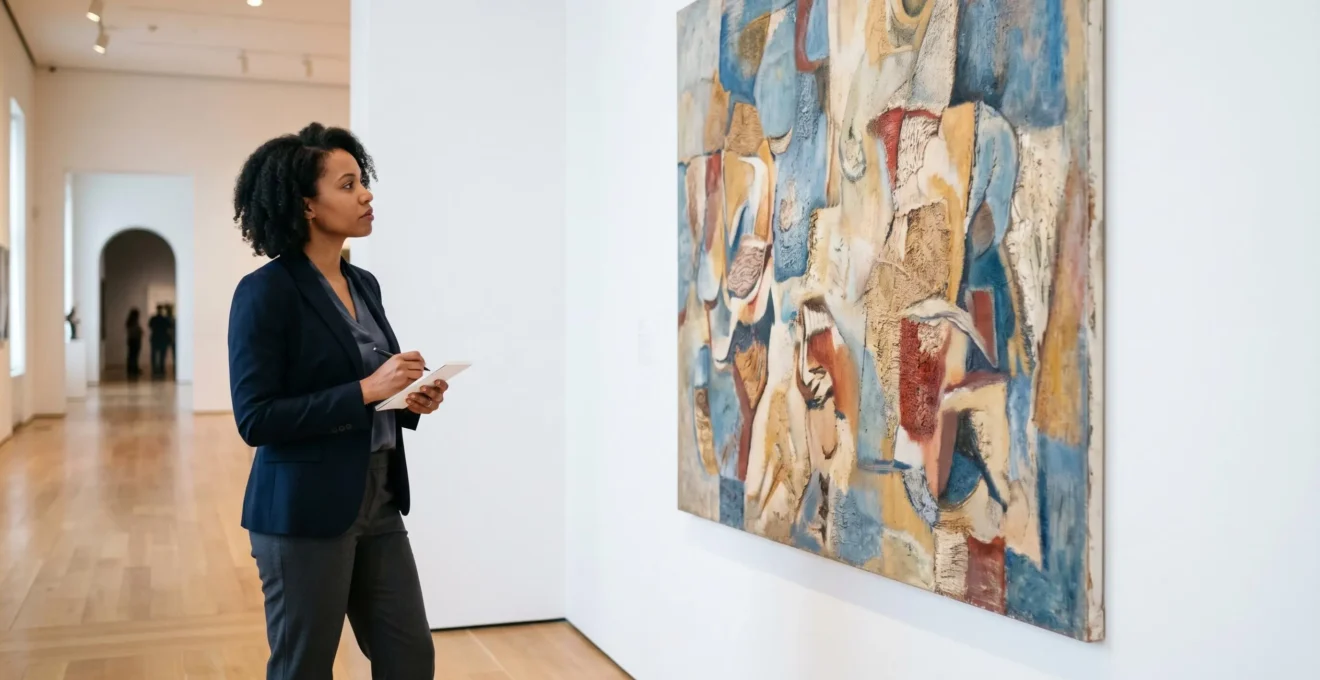
Contrary to the belief that museum acquisitions are a matter of a single curator’s taste, entering a national collection is the result of a disciplined, multi-layered institutional process. Decisions are not acts of personal preference but are governed by rigorous research, ethical frameworks, and a long-term curatorial strategy designed to build and correct the historical canon for future generations.
The moment an artwork enters a national collection, it transitions from a commodity to a piece of cultural heritage. For artists, this is the pinnacle of recognition; for the public, it is how art history is written and preserved. A common misconception paints this process as opaque, decided in a back room by a handful of individuals with inscrutable tastes. This perception, however, overlooks the complex institutional machinery at work. The decision to acquire is rarely about one person’s preference. It is a strategic, evidence-based consensus reached through a system of checks, balances, and intense scholarly debate.
The core of this process is not simply selecting “good” art, but building a collection that is coherent, historically significant, and representative of the diverse world it seeks to reflect. This involves navigating the currents of the art market, assessing the long-term relevance of contemporary trends, and critically re-examining the past to correct historical omissions. Far from being an impulse buy, an acquisition is a permanent commitment. It is a declaration that an artist’s voice matters and will continue to matter for decades, even centuries, to come. This article will demystify this procedure, revealing the formal structures, ethical considerations, and strategic thinking that guide how a work of art achieves permanence.
To understand how these critical decisions are made, this article breaks down the key components of the acquisition process, from the committees that hold the vote to the long-term impact on an artist’s legacy.
Summary: The Path to a Permanent Collection
- Who Actually Votes on New Purchases for the Tate Collection?
- Correcting History: How Are Collections Addressing Past Gender Imbalances?
- Trend vs Canon: How to Know if an Artist Will Matter in 50 Years?
- The Error of Accepting “Gifts” That Don’t Fit the Curatorial Strategy
- Blockbuster Effect: Does Popularity Influence Permanent Acquisition Decisions?
- Archives and Catalogues: When to Start Documenting Your Career for History?
- Why Does a Painting Sell for Millions while a Poster Sells for Twenty?
- What Does a Modern Curator Actually Do beyond Selecting Artworks?
Who Actually Votes on New Purchases for the Tate Collection?
The decision to acquire a work for a national institution like the Tate is not made by a single director or curator. It is a structured, multi-stage process rooted in collective expertise and institutional governance. The initial proposal originates with a specialist curator who champions the work, but it must then navigate a gauntlet of committees. This institutional framework is designed to ensure that every acquisition aligns with the museum’s strategic objectives, is financially viable, and meets rigorous curatorial standards.
Case Study: The Tate’s Multi-Layered Approval Process
At the Tate, acquisition proposals are scrutinized by several internal bodies. A specialist curator first presents their assessment. The proposal then moves to a Collection Group, which includes the Director and the Director of Collection. From there, it goes to one of the multiple specialized acquisition committees, which may include regional committees focused on international art. The final step is ratification by the Board of Trustees. This tiered structure ensures decisions are vetted through lenses of curatorial expertise, institutional strategy, and fiduciary responsibility, safeguarding the collection’s integrity.
These committees are not merely a formality; they are a critical part of the due diligence. As Amin Jaffer, International Director of Asian Art at Christie’s, noted regarding his experience with Tate committees, the value extends beyond the financial. He stated, “The Tate and the committee members themselves benefit from the collective knowledge and network of the group, enhancing the overall level of understanding, whether of an artist’s practice or the specifics of a particular market.” This collaborative model pools expertise, mitigates individual bias, and reinforces the strategic, rather than personal, nature of building a national collection.
Correcting History: How Are Collections Addressing Past Gender Imbalances?
A core part of the modern curatorial mandate is to look backward as much as forward. For decades, the art historical canon, as reflected in museum collections, has been overwhelmingly male and white. Acknowledging this is the first step; actively correcting it is the ongoing mission. This is not about rewriting history, but about completing it by recognizing and acquiring the work of artists who were systematically overlooked. The data reveals a stark imbalance: research published in PLOS One reveals that just 12.6% of artists in major US museum collections are women.
To address this, institutions are employing proactive strategies that go beyond simply acquiring more works by women. One of the most potent, and controversial, tools is “progressive deaccessioning”. This involves strategically selling works from the existing collection—often by well-represented white male artists—to generate funds specifically earmarked for acquiring works by underrepresented artists. This directly reallocates resources to correct historical gaps.
Case Study: The Baltimore Museum of Art’s Deaccessioning Strategy
In 2018, the Baltimore Museum of Art pioneered this approach by deaccessioning seven works by artists like Andy Warhol and Robert Rauschenberg. The sale raised $16 million, which was then used to purchase art by women and artists of color. This set a precedent, with institutions like SFMOMA following suit. While a subsequent, more ambitious attempt at deaccessioning by Baltimore in 2020 faced backlash and was halted, the initial move fundamentally shifted the conversation, demonstrating a powerful mechanism for institutions to put their financial weight behind their commitment to diversity and equity.
Trend vs Canon: How to Know if an Artist Will Matter in 50 Years?
One of the most challenging tasks for an acquisition committee is distinguishing fleeting trends from work with lasting art historical significance. The art market is susceptible to hype, and an artist who is a sensation today may be a footnote tomorrow. An institution’s role is not to chase the market, but to identify artists whose work contributes to a larger cultural and aesthetic conversation—work that will remain relevant and resonant for future generations. This requires deep research, a firm grasp of art history, and a degree of connoisseurship that looks beyond immediate popularity.
This is where the curatorial strategy becomes paramount. Decisions are not made in a vacuum; they are part of a long-term collection development plan. This plan identifies strengths to build upon and, more importantly, gaps to be filled. The key question is not “Is this artist popular?” but “Does this artist’s work add a crucial voice or perspective that is currently missing from our collection’s narrative?” As one acquisition specialist explains, this is a calculated and mission-driven endeavor.
Curators are constantly researching potential additions to the museum’s holdings. This isn’t impulse buying; it’s a highly strategic process driven by the museum’s mission, collection development policies, and a deep understanding of market trends, donor interests, and scholarly gaps.
– Museum acquisition specialist, Wonderful Museums: What Does a Museum Curator Do?
Therefore, the evaluation focuses on an artist’s entire practice: the rigor of their conceptual framework, their innovation within a medium, their dialogue with art history, and their influence on other artists. An institution is betting on an artist’s entire career trajectory and historical contribution, not just a single, fashionable work. It is a long-term investment in the intellectual and cultural canon.
The Error of Accepting “Gifts” That Don’t Fit the Curatorial Strategy
While purchases are a key acquisition method, a significant portion of a museum’s collection often comes from donations or bequests. From the outside, turning down a “free” work of art might seem counterintuitive. However, accepting a gift is as significant a decision as a purchase and is subject to the same rigorous evaluation. An artwork that does not align with the museum’s curatorial strategy can be a greater liability than an asset. It consumes resources for storage, conservation, and insurance without enhancing the collection’s core narrative.
Every potential gift is assessed against the same criteria as a potential purchase: its artistic merit, condition, provenance, and relevance to the existing collection. The primary question is whether the work strengthens the museum’s holdings and fits within its mission. Furthermore, ethical considerations are paramount, especially when the gift comes from a person with close ties to the institution, such as a trustee. Strict governance is required to avoid any conflicts of interest or the appearance of a “quid pro quo” transaction.
Case Study: Tate’s Governance Reform for Artist Trustee Gifts
The Tate’s policies exemplify this rigor. Following an investigation by the UK’s Charity Commission, the institution strengthened its procedures for managing conflicts of interest. The museum now requires external Charity Commission approval for all acquisitions of works by serving Artist Trustees. This established clear institutional firewalls to protect curatorial independence and ensure that all gifts, regardless of their source, are accepted solely on their merit and strategic fit, preventing any perception of self-dealing. This case underscores that no gift is truly “free” and must be vetted through a robust ethical framework.
Blockbuster Effect: Does Popularity Influence Permanent Acquisition Decisions?
The success of a “blockbuster” exhibition can generate enormous public interest and revenue for a museum. A natural question arises: does this level of popularity influence an institution’s decision to acquire an artist’s work for its permanent collection? While public engagement is a key part of a museum’s mission, acquisition strategy is generally firewalled from short-term popularity metrics. The goal is to lead public taste and shape art history, not merely reflect it. In many cases, the most significant acquisitions are of artists who are not yet household names.
A museum can, in fact, create a “blockbuster” by taking a scholarly risk on a historically overlooked artist. By investing its curatorial and institutional resources into researching and presenting such an artist, the museum can re-introduce them to the public and single-handedly rewrite their place in the canon. This validates the power of connoisseurship over trend-following. The success of the resulting exhibition becomes a vindication of the museum’s long-term vision, not a driver of it.
Case Study: The Guggenheim’s Hilma af Klint Blockbuster
In 2019, the Guggenheim’s exhibition of Swedish spiritualist painter Hilma af Klint became the most-visited show in the institution’s history, drawing over 600,000 visitors. Af Klint, a pioneer of abstraction who was largely unknown to the general public, became an overnight sensation. The museum’s director admitted he was initially unsure of the public’s reaction. This case perfectly illustrates how an institution’s scholarly commitment to an under-recognized artist can create unprecedented public engagement, proving that deep curatorial work can generate popularity rather than being dictated by it.
Archives and Catalogues: When to Start Documenting Your Career for History?
For an artist aspiring to enter a museum collection, the work itself is only part of the equation. Curators and researchers are not just acquiring an object; they are acquiring a piece of history. A well-organized, comprehensive archive is an invaluable asset that provides the context, provenance, and intellectual framework for the artwork. The process of documentation should begin the moment an artist considers their practice a serious, long-term endeavor. An artist’s archive is the raw material from which art history is written.
Institutions like the Tate have dedicated archive departments that collect a vast range of materials. This demonstrates that what is valued is not just the final product, but the entire creative and professional ecosystem around it. A disorganized or non-existent archive can be a significant hurdle for acquisition, as it complicates the essential work of provenance research and scholarly assessment. For a curator, an artist who has meticulously documented their own career is an artist who understands their potential place in history and is a more viable partner for the institution.
Action Plan: Building Your Archival Legacy
- Inventory Your Work: Create a definitive catalogue of all finished pieces, including title, date, medium, dimensions, and high-resolution photographs. This is your catalogue raisonné in-progress.
- Document the Process: Preserve materials that reveal your creative thinking. This includes sketchbooks, working notes, digital mock-ups, and correspondence with collaborators or fabricators.
- Compile Your Exhibition History: Maintain a complete record of every exhibition, including checklists, installation shots, press releases, reviews, and published articles. This tracks your public career.
- Maintain Provenance Records: For every work sold, keep a clear record of the initial buyer and any subsequent changes in ownership you are aware of. This is crucial for future authentication.
- Consolidate and Digitize: Organize all physical materials and scan important documents. A well-structured digital archive is easily shareable with curators, gallerists, and researchers.
This disciplined approach to self-documentation transforms an artist’s career materials from a disorganized collection of papers into a strategic asset for securing a place in a national collection.
Why Does a Painting Sell for Millions while a Poster Sells for Twenty?
The art market and the museum world exist in a complex, symbiotic relationship. While a museum’s decision to acquire is based on curatorial strategy, that decision has a profound and immediate impact on an artist’s market value. The distinction between a unique painting and a mass-produced poster lies in rarity, but the distinction in value is magnified exponentially by institutional validation. When a public institution acquires an artist’s work, it acts as a powerful legitimizing agent. It signals that the artist has moved beyond the commercial market and entered the historical canon.
This “museum effect” is quantifiable. According to research on museum growth hacking, artworks equivalent to those acquired by museums are later sold on the market at prices averaging 18.2 times higher. This is because the museum confers a level of prestige and authenticity that no private gallery or collector can match. It certifies the artist’s importance for posterity. As Tate research notes, public institutions are “perceived as somewhat ‘objective’, [and] act as legitimising agents reinforcing notions of artistic legitimacy, authenticity and value.”
Interestingly, museums can also use their influence to lead the market in correcting value disparities. Research shows that while a significant gender gap persists in the art market, museums are investing more heavily in female artists, sometimes paying prices far above market rates for their work. This demonstrates how an institution can assign cultural value that transcends commercial value, using its acquisition budget to make a statement and actively reshape the market’s perception of an artist’s worth.
Key Takeaways
- Acquisition decisions are made by multi-layered committees, not individual curators, to ensure strategic alignment and mitigate bias.
- Modern curatorial strategy is actively focused on correcting historical omissions, particularly gender and racial imbalances, within the collection.
- An artist’s meticulously maintained archive is a critical asset, as provenance, research, and context are as important as the artwork itself.
What Does a Modern Curator Actually Do beyond Selecting Artworks?
The title “curator” often evokes the image of a solitary scholar selecting beautiful objects. While connoisseurship remains a core skill, the role of a modern curator within a national institution is far more multifaceted. A curator is a researcher, diplomat, administrator, project manager, and financial negotiator rolled into one. They are the central node in the complex ecosystem of an acquisition, coordinating between numerous specialized departments.
The U.S. Bureau of Labor Statistics notes that curators “negotiate and authorize the purchase, sale, exchange, and loan of collections. They also may research, authenticate, evaluate, and categorize the items in a collection.” This work involves meticulous investigation. A crucial part of the acquisition process is provenance research, where curators delve into auction records, dealer archives, and personal papers to ensure a work was acquired legally and ethically, with no connection to illicit trade or colonial plunder. This deep, investigative work is fundamental to the institution’s ethical responsibilities.
Case Study: Multi-Departmental Collaboration at Tate
The acquisition process at the Tate illustrates this collaborative reality perfectly. A single acquisition involves curatorial departments, the acquisition coordination team, conservators specializing in different media, collection management and registrar teams, art handlers, and photographers. The curator must steer the proposed artwork through this entire institutional apparatus. This reveals that the modern curator’s primary function is often one of coordination and advocacy within a large organization, requiring a skill set that goes far beyond a good “eye” for art.
Ultimately, the curator is the intellectual custodian of a part of the collection, responsible for not only its growth but also its interpretation and care. It is a role that requires a unique blend of scholarly depth and administrative acumen.
For artists, understanding this intricate process is the first step toward strategically positioning their career for historical consideration. For the public, it offers a deeper appreciation for the thought, rigor, and responsibility that go into building the collections that define our shared cultural legacy.