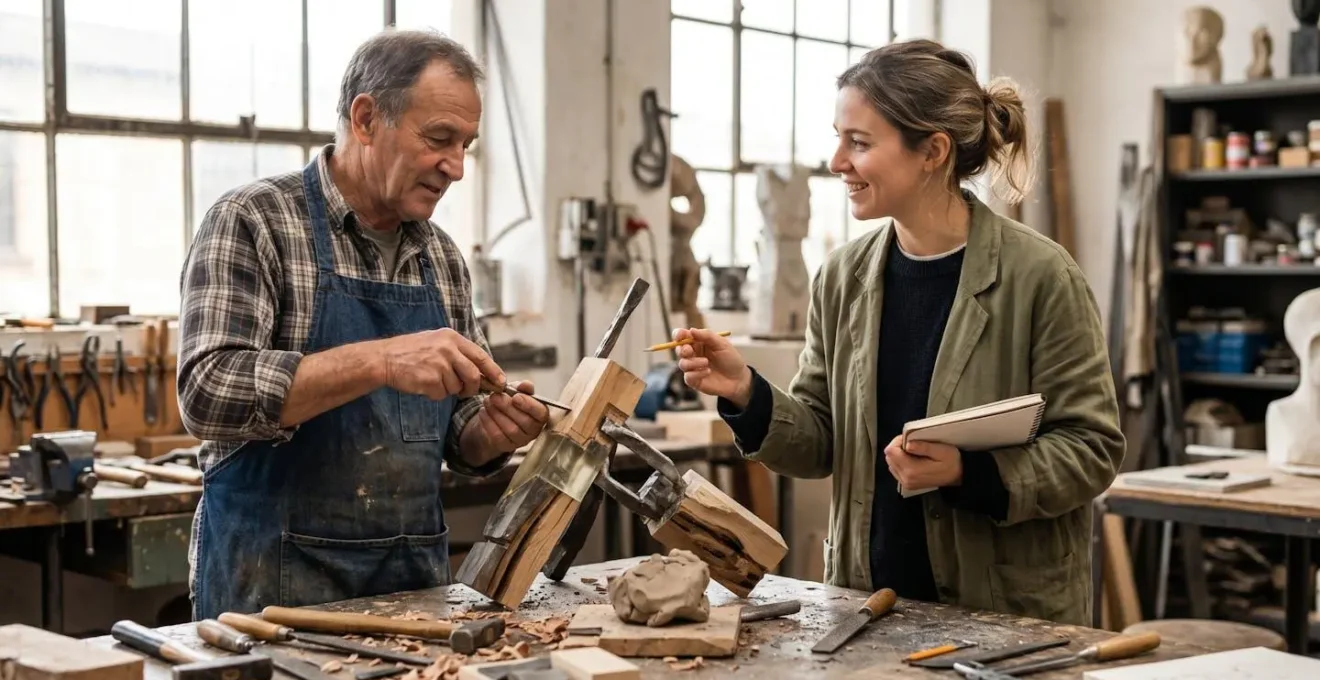
The key to unlocking the fine art market is to stop acting as a service provider and start operating as a strategic partner with indispensable intellectual and technical assets.
- Your craft is not just a skill; it’s a form of intellectual property that must be protected and leveraged contractually.
- Success in artist collaborations hinges on securing formal credit, managing production runs professionally, and proactively finding the right partners.
Recommendation: Approach your next collaboration inquiry by preparing a proposal that outlines shared success, including co-author credit and editioning rights, not just a quote for your time.
For too long, the narrative has been simple: the artist has the vision, and the artisan has the hands. As a master craftsperson—a glassblower, a ceramicist, a metalsmith—you’ve poured years into mastering a medium that conceptual artists can only dream of controlling. Yet, when a collaboration results in a critically acclaimed piece, your name is often relegated to a footnote, if it appears at all. You are seen as a fabricator, a skilled technician executing a plan. This dynamic leaves you with a paycheck, but no legacy, no equity, and no direct access to the lucrative fine art market you helped create.
Many will offer generic advice: « communication is key » or « get a good contract. » While true, this advice misses the fundamental power shift required for true mutual benefit. It keeps you in a reactive position, waiting for an artist to dictate the terms. But what if the real opportunity isn’t just to be a better fabricator, but to reposition yourself as an indispensable strategic partner? What if your deep material knowledge is not just a service, but a crucial intellectual asset in the creation of the work?
This guide abandons the « hired hand » mentality. Instead, it provides a strategic framework for artisans to proactively manage collaborations with conceptual artists. We will explore how to secure the credit you deserve, bridge the technical-conceptual divide, structure production for gallery shows, and protect your most valuable asset—your process. This is your playbook for transforming your craft into a gateway to the contemporary art world, ensuring that when the work is celebrated, you are celebrated alongside it.
This article provides a detailed roadmap for turning your craft into a strategic asset. To help you navigate, the following summary outlines the key stages we will cover, from securing credit to executing complex projects.
Summary: Forging Profitable and Credible Artist-Artisan Partnerships
- Name on the Wall: How to Ensure the Fabricator Gets Credit alongside the Artist?
- Technical vs Conceptual: How to Communicate with Artists Who Don’t Know the Material?
- One-Off or Edition: How to Manage a Production Run for a Gallery Show?
- The Error of Giving Away Your Process Secrets without a Contract
- Residencies and Networks: Where to Meet Artists Looking for Fabricators?
- Consultation or Imposition: How to Get Locals on Board with Your Art?
- Diplomacy and Egos: How to Handle Difficult Artists during Installation?
- How to Propose and Execute a Public Installation Art Project in a UK City?
Name on the Wall: How to Ensure the Fabricator Gets Credit alongside the Artist?
The first and most critical shift in mindset is moving from seeking payment to demanding equity in the form of credit. In the contemporary art world, attribution is currency. Your name on the gallery wall, in the catalog, and on the sales certificate is not a vanity request; it’s a strategic asset that builds your reputation and attracts future, higher-value collaborations. Without it, you remain an invisible force, no matter how integral your contribution was. The art world itself is slowly beginning to acknowledge this, as a 2018 New York Times analysis noted art fabricators have taken on greater importance as concepts often outweigh execution in art school training.
Securing credit cannot be an afterthought or a verbal promise. It must be a non-negotiable term embedded in your initial agreement. This means contractually stipulating how your name or studio will appear. Best practices include specifying the exact wording, such as « Jeff Koons, fabricated by [Your Studio Name], » on all public-facing materials. This includes:
- The wall label in the gallery or museum.
- The official certificate of authenticity that accompanies the work.
- All press releases and marketing materials.
- The artist’s website and the gallery’s online viewing room.
This isn’t about challenging the artist’s authorship but about accurately reflecting the collaborative nature of creation. Frame this to the artist as a mark of quality and transparency. A confident artist is proud to acknowledge the master craftspeople who helped realize their vision. A refusal to grant proper fabrication credit is a significant red flag, suggesting the artist views you as a disposable vendor, not a partner.
Technical vs Conceptual: How to Communicate with Artists Who Don’t Know the Material?
The most common friction point in an artist-artisan collaboration is the « language barrier. » The artist speaks in terms of concepts, feelings, and aesthetics, while you speak in terms of material tolerances, firing temperatures, and structural integrity. They might ask for glass that « feels like a frozen breath, » leaving you to translate that poetry into a viable physical object. The key to success is not to dismiss their language but to become a translator, guiding their concept toward a feasible outcome without sacrificing its soul.
This process begins by establishing a shared vocabulary built on physical examples, not just words. Create a « material library » in your studio—a curated collection of test tiles, finish samples, and small-scale experiments. When an artist describes an effect, you can present them with tangible options. This transforms an abstract conversation into a concrete one. It allows the artist to see and touch the possibilities, making them an active participant in the technical problem-solving. It’s a collaborative dialogue where you educate them on the material’s nature while respecting their conceptual goals.
This hands-on approach builds trust and mutual respect. As Adriano Berengo of the famed Berengo Studio notes, this physical interaction is irreplaceable. Speaking of artists collaborating with his glass masters, he emphasizes the need to become true partners in creation. As he stated in an analysis on top art fabricators:
Although conversations can and do happen online, artists need to have the first person experience of the shop, with the smell and heat of the kilns. They need to physically be there to push the maestros toward a desired direction, becoming accomplices and learning a common language.
– Adriano Berengo, The best six art fabricators
By transforming your studio into a laboratory for ideas, you position yourself not as a simple executor but as a co-creator and essential consultant. You are the bridge between the imagined and the made.
One-Off or Edition: How to Manage a Production Run for a Gallery Show?
Once a successful prototype is created, the next conversation is about production. Will this be a unique, one-of-a-kind piece, or will it be produced as a limited edition? This decision dramatically impacts your workflow, pricing, and potential for long-term revenue. As the artisan partner, you must lead this conversation from a position of manufacturing expertise. You understand the complexities of reproducing a piece with consistency while retaining its artistic integrity—a challenge many artists underestimate.
Managing a production run requires a detailed project plan agreed upon before any work begins. This is where legendary workshops like Gemini G.E.L., established in the 1960s, set the standard by creating structured, collaborative models for producing multiples for artists like Robert Rauschenberg and Claes Oldenburg. Your agreement should be just as rigorous, outlining every stage of the process. Key elements to define in your production agreement include:
- The exact number of works in the edition, plus any Artist’s Proofs (APs).
- A quality control standard: what degree of variation between pieces is acceptable?
- A detailed production timeline with key milestones and delivery dates.
- A clear payment structure, often with a deposit, milestone payments, and a final payment upon completion.
- Clarification on who covers costs for material waste, mistakes, or failed attempts.
This level of planning protects both you and the artist. It prevents scope creep, manages expectations, and ensures you are compensated fairly for the immense effort involved in creating a consistent edition. A well-managed production run solidifies your reputation as a professional and reliable partner, making you the go-to artisan for future projects.
Your Action Plan: Auditing a Production Agreement
- Key Agreement Terms: Systematically list and review all clauses covering credit, payment schedules, IP rights, edition size, and project timeline.
- Inventory of Contributions: Formally document all your tangible (materials, tools) and intangible (proprietary techniques, R&D) assets being brought to the project.
- Alignment Check: Confront the proposed terms with your business goals. Does the credit clause offer sufficient visibility? Does the payment schedule support your cash flow?
- Risk vs. Reward Assessment: Create a simple grid to map unique opportunities (e.g., entry into a new market, high-profile show) against potential risks (e.g., unclear IP rights, delayed payment).
- Negotiation Roadmap: Based on the audit, create a prioritized list of terms to renegotiate, clarify, or add to the contract before signing.
The Error of Giving Away Your Process Secrets without a Contract
Your most valuable asset isn’t your hands; it’s the knowledge behind them. The unique glaze recipe passed down through generations, the proprietary method for slumping glass without cracking, the specific tool you engineered for a unique texture—this is your intellectual property (IP). The single greatest mistake an artisan can make is to share this knowledge freely without a contractual framework to protect it. An artist might learn your process and then take it to a cheaper fabricator for the final run, leaving you with nothing.
It is crucial to understand the legal default: unless a contract states otherwise, the artist who conceives of the work is generally considered the author and owner of the copyright. This is why a formal agreement is not optional; it is essential. An analysis by legal experts at Thomson Reuters confirms that assignment of IP requires an explicit written transfer, making contracts the only way to clarify and secure your rights. Your contract must address IP head-on.
There are two primary tools for this: 1. Non-Disclosure Agreements (NDAs): Before revealing any proprietary techniques, have the artist sign an NDA. This legally prevents them from sharing your trade secrets with others. It’s a standard business practice that signals you are a serious professional protecting valuable assets. 2. Clauses on Process and Future Works: Your main fabrication agreement should include a clause that explicitly states that your pre-existing techniques and any new processes developed during the collaboration remain your property. It can also stipulate that if the artist wishes to create a similar work in the future using these methods, they are obligated to return to you or pay a licensing fee. Protecting your IP isn’t about being secretive or difficult; it’s about valuing your life’s work. A respectful partner will understand and appreciate this professionalism.
Residencies and Networks: Where to Meet Artists Looking for Fabricators?
You cannot collaborate with artists if you don’t know where to find them. Waiting for them to discover your studio is a passive and unreliable strategy. The most opportunistic artisans actively place themselves in environments where creativity and production intersect. The single best place for this is at artist-in-residence programs, particularly those focused on specific materials or fabrication processes.
These residencies are magnets for ambitious conceptual artists who have ideas that exceed their technical skills. By associating your studio with a residency—or even hosting one yourself—you gain direct access to a curated stream of talent. You can act as a technical mentor, a consultant, or a fabrication partner. This context immediately establishes you as an expert and a collaborator, not just a service provider. These programs often come with funding for materials and fabrication, removing one of the biggest hurdles to experimental work.
Case Study: The Powerhouse Arts Model
Powerhouse Arts in Brooklyn offers a fabrication-focused Artist in Residence program that provides NYC artists with access to state-of-the-art facilities for printmaking, ceramics, and textiles. Crucially, the program includes support from on-site fabricators and technicians, a material stipend, and mentorship. This model creates direct, funded pathways between artists and skilled makers, fostering collaboration by design. It requires artists to work with the fabrication teams to finalize their projects, ensuring a partnership from the outset.
Programs like the Kohler Arts/Industry residency offer another powerful model, where artists get to work directly within the Kohler Co. factory. A key feature is that no prior material experience is required for artists, demonstrating how these residencies are explicitly designed to create opportunities for the exact kind of collaboration you seek. Seek out these programs, offer your services as a technical advisor, or attend their open-studio events. Go where the artists are, and position yourself as the solution they didn’t know they were looking for.
Key Takeaways
- Strategic Positioning is Everything: Shift your mindset from a « hired hand » to a strategic partner whose material expertise is an indispensable intellectual asset.
- Credit is Currency: Your name on the wall label and certificate of authenticity is not vanity; it’s a non-negotiable asset that builds your reputation and market value.
- Protect Your Process: Your unique techniques are your most valuable intellectual property. Use NDAs and clear contractual clauses to protect them before sharing anything.
Consultation or Imposition: How to Get Locals on Board with Your Art?
When collaborations scale up to the level of public art, a new and crucial partner enters the equation: the local community. A multi-ton sculpture placed in a town square is not a private transaction; it’s an intervention in public life. The success of such a project often hinges less on the aesthetics of the piece and more on whether the community feels a sense of ownership or imposition. Ignoring the local population is a recipe for controversy and backlash, which can tarnish the reputation of both the artist and the fabricator.
The opportunistic artisan sees this not as a hurdle, but as a chance to add value. You can guide the artist and commissioning body on how to engage the community in the fabrication process itself. This creates powerful buy-in and generates positive stories that amplify the project’s impact. As the Brighton & Hove City Council notes in its public art guidance, community engagement is a platform for creating a sense of ownership and connection. The strategies to achieve this are practical and powerful:
- Form a Steering Group: Ensure local stakeholders with an interest in the project are represented on the project’s steering group and even help select the artist or design.
- Host « Making-Of » Workshops: Partner with local schools or community centers to host workshops related to the techniques you are using. This demystifies the craft and connects people directly to the artwork’s creation.
- Create Ancillary Content: Develop permanent plaques or QR codes near the final installation that detail the fabrication process, the materials used, and the craftspeople involved. This tells your story long after the installation is complete.
By championing community involvement, you position yourself as a thoughtful and socially aware partner, not just a fabricator. You help ensure the artwork is not just installed, but truly welcomed.
Diplomacy and Egos: How to Handle Difficult Artists during Installation?
The final phase of a major collaboration—on-site installation—is often the most stressful. Timelines are tight, logistics are complex, and egos can run high. An artist seeing their vision realized at full scale for the first time may become anxious, demanding last-minute changes that are impractical or unsafe. As the fabrication partner responsible for the physical integrity of the work, you are on the front line of managing this tension. Your role here is one of calm, authoritative diplomacy.
The key to handling difficult moments is proactive management, not reactive conflict resolution. The time to manage an artist’s expectations is not on a windy construction site, but months earlier in the studio. A thoroughly detailed and pre-approved installation plan is your greatest tool. This plan should include detailed schematics, a clear schedule of events, defined roles for every team member, and contingency plans for common problems. When an artist requests a significant change on-site, you can refer back to the agreed-upon document, transforming a potential argument into a logistical discussion about the impact on budget, safety, and timeline.
It is also wise to advocate for a neutral third party, such as a professional art advisor or project manager, to act as a liaison. This person can mediate discussions and reinforce the project parameters, allowing you to focus on the technical execution. By establishing clear protocols and a chain of command, you create a professional framework that minimizes the impact of emotion and ego. Your job is to be the steady hand that guides the project to a safe and successful completion, reinforcing your value as a reliable and unflappable partner.
How to Propose and Execute a Public Installation Art Project in a UK City?
Executing a public art project, particularly in a country with established protocols like the UK, is the ultimate test of an artisan’s strategic and logistical capabilities. It moves beyond the workshop into the complex world of urban planning, civil engineering, and public policy. Understanding this landscape is a massive opportunity, as it allows you to be a far more valuable partner to an artist, guiding them through a bureaucratic maze they are often unprepared for.
The process in a UK city typically involves multiple layers of approval that must be navigated. An artist with a brilliant idea but no knowledge of these requirements will fail before they even begin. By familiarizing yourself with these stages, you can co-author proposals that are not just conceptually strong, but also practically viable. According to UK commissioning standards, public realm artworks must have a design lifespan of 60 to 120 years, a consideration that profoundly impacts material selection and fabrication methods from day one.
The following table, based on common UK requirements, illustrates the key hurdles a public art project must clear. While specific to the UK, it serves as a model for the types of regulations you might encounter in any major city.
| Requirement Type | Key Elements | Timeline | Authority |
|---|---|---|---|
| Section 106 Planning Obligation | Legal agreement between developer and local planning authority to mitigate development impact and deliver public art benefits | Negotiated during planning application process | Local Planning Authority |
| Planning Permission | Required for sizable outdoor installations; may require public consultation exercises and consideration of cultural well-being | Minimum 12 weeks for initial consultation with Highways, Planning, and District Surveyors | Local Planning Department |
| Technical Compliance | Material certifications, structural engineering reports, public liability insurance, maintenance plans, and health & safety requirements | Developed during design stage, submitted with planning application | Structural Engineers, Planning Officers |
| Community Engagement | Stakeholder representation on steering groups, public consultation sessions, and artist engagement activities | Throughout design and commissioning process | Commissioner and Community Groups |
By understanding this framework, you transform from a fabricator into a strategic consultant on project viability. You can advise on material durability, long-term maintenance needs, and installation logistics from the very first proposal, making the entire project more likely to be approved and successfully realized.
Your journey from artisan to indispensable partner is not about changing your craft, but about changing the conversation around it. Start reframing your next inquiry not as a job to be quoted, but as a strategic partnership to be proposed. The opportunities are waiting for the maker who is ready to claim their seat at the table.